-
 Industries OverviewThe company's products are primarily used in industrial equipment sectors such as nuclear power, petroleum, petrochemicals, chemical engineering, power generation, automotive manufacturing, shipbuilding, fertilizer production, pharmaceuticals, papermaking, sugar refining, and machinery manufacturing.
 -
 Products & SolutionsOur Products: Ferrous metal ore raw materials (nickel ore, ferronickel, ferrochrome, ferromanganese, ferrosilicon, etc.), seamless pipes, welded pipes, medium-thick plates, plate coils, bars, wire rods, wire coils, pipe fittings, flanges, castings, etc.
 -
 CommunityThe company has established an excellent reputation within the industry through its strong credibility, comprehensive services, and ample resources.
 -
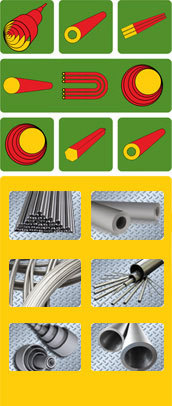
 Process VisualizationThe company's products are primarily used in industrial equipment sectors such as nuclear power, petroleum, petrochemicals, chemical engineering, power generation, automotive, shipbuilding, fertilizer production, pharmaceuticals, papermaking, sugar refining, and machinery manufacturing.
 -
 About UsTsisco Industrial Ltd. was established in 2010. Originating from the Tsingshan ecosystem’s Shanghai platform, the company now operates independently and focuses on global supply-chain integration, distribution, and import/export of steel and alloy materials. We achieved ISO 9001 certification from TÜV Rheinland in 2012, and ISO 9001, ISO 14001 and ISO 45001 certifications from LRQA in 2022. These accreditations underpin continuous improvement and stable performance in quality, environment, and occupational health & safety.
-
Products & Solutions
Metallic Composite Pipe for Oil & Gas Gathering & Transportation
Metallic Composite Pipe for Oil & Gas Gathering & Transportation

Metallic Composite Pipe for Oil & Gas Gathering & Transportation( Clad & Lined Pipe) |Global Sourcing for Engineering & Procurement
(Applicable to onshore and offshore gathering, H₂S/CO₂ service, water injection and produced water, thermal and deepwater subsea pipelines)
1. Product Positioning and Service Scope
1. Definition: “Clad and lined pipe” consists of a carbon-steel backing for strength and external pressure, and a corrosion-resistant alloy inner layer as the barrier. Two common forms are metallurgically clad pipe (bonded CRA layer) and mechanically lined pipe (oversized CRA liner expanded or reduced mechanically).
2. Scope: Suited for corrosive media in O&G service containing H₂S, CO₂, organic acids, chlorides and oxygenated injection water, covering onshore transmission, offshore topsides and subsea pipelines from wellheads to terminals.
3. Boundary to solid CRA pipe: For extremely severe media or conditions beyond the composite window, use solid CRA line pipe. For typical H₂S/CO₂ and seawater systems, clad or lined pipe optimizes life-cycle cost.
2. Standards Matrix (Global and Cross-Code Interface)
1. Base and line pipe: API 5L and ISO 3183; subsea design per DNV-ST-F101.
2. Clad and lined: API 5LD applies to metallurgically clad and mechanically lined pipes; solid CRA line pipe may follow API 5LC.
3. Materials fit: CRA layer per ASTM A240 and ASTM A312 for stainless steels, ASTM A790 for duplex, ASTM B444/B423 for nickel alloys; carbon-steel backings per API 5L, ASTM A516, ASTM A36 as specified.
4. Coating and external protection: ISO 21809 series for external anti-corrosion and field joint coatings.
5. Sour compliance: NACE MR0175/ISO 15156 for oil and gas sour environments, NACE MR0103 for refinery sour service.
6. Fabrication and welding: NORSOK M-601 for welding and fabrication, NORSOK M-650 for manufacturer qualification of CRA materials; IOGP JIP33 supplementary specs may apply to API 5L/ISO 3183 procurement.
7. Pipeline codes: ASME B31.4 and ASME B31.8 for onshore; DNV-ST-F101 and relevant RPs offshore.
8. QA framework: EN 10204 for inspection documents; EN ISO 9712/EN ISO 17635 for NDT personnel and methods as applicable.
3. Scenario–Material–Standard–Size Mapping (Text Quick Guide)
1. Onshore H₂S/CO₂ gathering: API 5L PSL2 backing with 316L or 317L CRA liner; API 5LD plus NACE MR0175; typical DN 100–DN 600; CRA nominal thickness 3–5 mm.
2. Seawater injection and produced-water systems: API 5L PSL2 backing with duplex 2205 or super-duplex 2507; API 5LD with NORSOK M-650; DNV-ST-F101 for offshore design; typical DN 150–DN 600; CRA thickness 3–6 mm.
3. Deepwater subsea transmission (high external pressure, free spanning): mechanically lined or metallurgically clad with Alloy 625 or 825; API 5LD, stability and buckling checks per DNV-ST-F101; typical DN 200–DN 500; wall thickness by design.
4. Chloride-rich, organic-acid multiphase lines: CRA 904L, 6Mo (S31254) or Alloy 825; API 5LD with NACE MR0175; typical DN 100–DN 400; CRA thickness 3–4 mm.
5. Hot sour rich gas and condensate laterals: CRA Alloy 625 liner; API 5LD with NACE MR0175; CRA-matching filler for welds; typical DN 50–DN 300.
6. Solid CRA preference: extremely severe acids, very long maintenance-free design or details not amenable to liners; use API 5LC solid CRA (e.g., 825, 625, C-276); size and wall by project.
4. Size Range and Tolerances (Typical Engineering Window)
1. Outside diameter: about 60–1422 mm; subsea commonly 168.3–508 mm.
2. Wall thickness: backing steel by strength and stability, typically 6–40 mm; CRA layer nominal 2.5–6 mm.
3. Length: 6–12 m, with 12 m common offshore.
4. Tolerances and geometry: OD, WT, ovality and straightness per API 5L/ISO 3183; CRA thickness and bond integrity per API 5LD. For mechanically lined pipe, wrinkle height, waviness and end-locking are quantified by API 5LD and project-specific supplements.
5. Ends: bevel per ASME B16.25; CRA end-locks or CRA rings for MLP to ensure corrosion barrier continuity at girth welds.
5. Manufacturing Flow and Critical Controls
1. Metallurgically clad route: CRA-clad plates by roll-bonding or explosion-bonding → forming by UOE or JCOE → SAW longitudinal welding → heat treatment/reshaping → NDT → bond shear, bend and flattening tests → hydrotest and dimensional checks.
2. Mechanically lined route: API 5L backing pipe → thin-wall CRA liner insertion → mechanical expansion or reduction for interference fit → CRA end-locks/rings welding → stabilization cycles → wrinkle and slip control → hydrotest and geometry checks.
3. Welding and tie-ins: metallurgical SAW with matching consumables; girth welds with CRA matching filler or internal weld overlay to maintain barrier continuity.
4. Coating/thermal: external coatings per ISO 21809; concrete weight coating or thermal insulation as required by DNV-ST-F101.
5. Traceability: EN 10204 3.1/3.2 with full heat and CRA batch traceability.
6. Quality, Inspection and Dossier (ITP Backbone)
1. Chemistry and mechanics: per material standards; hardness and microstructure control per NACE MR0175 for sour service.
2. Bond and liner integrity: clad pipe—bond shear, bend and flattening; MLP—wrinkle height, de-bonding/slip checks and end-lock verification.
3. NDT and pressure: UT/RT of backing and welds; visual and thickness checks; hydrotest on each length.
4. Coating and FJC: DFT, adhesion and holiday tests; field joints per ISO 21809-3.
5. Dossier: MTCs, heat-treat/expansion records, welding/NDT reports, hydrotest, coating QC, third-party witnessing and NCR close-out.
7. Supply Forms and Packaging
1. Supply: straight pipe with optional coating, field joint materials, welding consumables and CRA inner rings for fit-up.
2. Protection: end caps, CRA liner protectors, external coating protection, seaworthy packing with lifting/stacking guidance.
8. Ordering Checklist (Insert into RFQ/PO)
1. Codes and editions: API 5LD + API 5L/ISO 3183; DNV-ST-F101 for offshore; ISO 21809 for coatings; NACE MR0175 for sour.
2. Materials and sizes: backing grade, OD × WT × length, CRA grade and nominal thickness, end configuration and locking scheme.
3. Welding and inspection: CRA filler for girth welds, NDT scope, bond shear/wrinkle limits, hydrotest pressure.
4. Coating and auxiliaries: coating system and DFT, FJC process, concrete weight or insulation if required.
5. Documentation and witnessing: EN 10204 3.1/3.2, TPI points, manufacturing procedures/NCR management, transport and storage.
9. Material Selection Guide (Text)
1. Cost-effective corrosion resistance: 316L/317L liners.
2. Chloride and injection water: duplex 2205/super-duplex 2507 liners.
3. Severe corrosion and hot rich gas: nickel alloy 625/825 liners or solid CRA.
4. Deepwater external pressure: MLP or clad with stability/buckling per DNV-ST-F101.
5. Life-cycle focus: optimize among clad, MLP and solid CRA based on media, P-T, weldability and maintenance windows.
10. Procurement, Construction and O&M Risk Alerts
1. Treating clad/MLP as plain carbon steel—missing CRA continuity at girth welds and end-locks.
2. Unspecified wrinkle limits and bend radii for MLP—liner instability during field forming.
3. Missing hardness/microstructure control for sour—SSC risk.
4. Coating/CP mismatch—early corrosion subsea.
5. FJC and CRA barrier not safeguarded—pitting and crevice corrosion initiation.
6. Inadequate hydrostatic/external pressure verification—insufficient safety margins.
11. Representative Line Items (Ready-to-Use)
1. Onshore H₂S/CO₂ service:
“Clad/Lined Pipe, API 5LD + API 5L PSL2, OD 323.9 mm × WT 12.7 mm × L 12 m; CRA 316L liner t = 3.5 mm; CRA end-lock; UT/RT; bond shear & flattening passed; external coating ISO 21809 3LPE; NACE MR0175 compliant; EN 10204 3.2.”
2. Seawater injection trunk (topsides to wellhead):
“Clad/Lined Pipe, API 5LD + DNV-ST-F101, OD 406.4 mm × WT 19.1 mm × L 12 m; CRA 2205 liner t = 4.0 mm; duplex matching filler at girth; 3LPP; FJC per ISO 21809-3; dossier with hydrotest & TPI.”
3. Deepwater subsea transmission:
“Mechanically Lined Pipe, API 5LD, OD 273.1 mm × WT 22.2 mm × L 12 m; CRA Alloy 625 liner t = 3.0 mm with CRA ring; stability & buckling per DNV-ST-F101; CWC applied; full documentation.”
12. Representative Global Suppliers (Alphabetical, Examples)
1. BUTTING (Germany): mechanically lined and metallurgically clad solutions for onshore/offshore.
2. EEW Group (Germany/Malaysia/Korea): longitudinally welded clad line pipe and offshore pipelines.
3. JFE Steel (Japan): clad plate and pipe solutions.
4. Nippon Steel (Japan): clad plate and pipeline systems including CRA materials.
5. Tenaris (Global): clad/lined pipe, offshore line pipe and integrated services.
6. Cladtek (Indonesia/Brazil/Saudi Arabia): CRA weld overlay and clad components (piping/fittings).
7. Proclad (UK/Middle East): CRA weld overlay and clad components.
8. China (selected channels): Baowu clad plate and partnered LSAW mills, major long-seam mills and EPC-grade system suppliers.
(Note: Vendor capabilities and qualifications vary; use project-specific prequalification and certification.)
Metallic Composite Pipe for Oil & Gas Gathering & Transportation(Clad/MLP/Weld Overlay) |Technical Specifications
1. Definition & application
• Carbon-steel host provides pressure/structural capacity; inner CRA layer/liner or weld overlay provides corrosion resistance. Scope includes straight pipe, bends, tees, reducers, valve cavities and pups for oil & gas gathering/transmission.
2. Standards matrix
• Product/material: API 5LD (clad/MLP), API 5LC (solid CRA if used), NORSOK M-630 (MDS optional offshore).
• Design/verification: DNV-ST-F101 (subsea); ASME B31.3/31.4/31.8 (process/liquid/gas); MLP stability per DNV-RP-F104; new technology per DNV-RP-A203.
• Welding/overlay: ASME IX (QW-214) + API RP 582; dissimilar welds commonly use ERNiCrMo-3 (Alloy 625).
• Coating/material selection: ISO 21809 (external), ISO 21457 (selection), ISO 15156/NACE MR0175 + TM0177/TM0284 (sour).
• Documentation: EN 10204 3.1/3.2, full ITP/ITR and traceability.
3. Construction routes
• Clad: explosion-bonded/hot-rolled clad plate → LSAW/SAW forming → HT → finishing. High shear-strength interface; preferred for high pressure/deepwater/severe corrosion trunklines.
• MLP: CS host + thin CRA liner hydraulically/roll-expanded with end mechanical locks; verify liner stability under external pressure/bending/installation via DNV-RP-F104. Cost-effective for large OD/long distance.
• Weld overlay: internal GTAW-HW/GMAW-P/SAW/PTA overlay in 625/316L/2507 etc.; control dilution (Fe%), effective thickness, hardness and ferrite per ASME IX + API RP 582. Ideal for fittings/valves/tees/bends/local reinforcement and “buttering”.
4. Materials (examples)
• Host: API 5L Gr.B / X52 / X60 / X65 / X70 / X80 (PSL2 recommended).
• CRA layer/liner: 304L/316L/317L/904L; duplex/super-duplex 2205/2507; Ni-base 625/825/C-276.
• Overlay fillers: ERNiCrMo-3 (625), 309/312 transition + 316L/625 finish as applicable.
• Selection per ISO 21457; sour per ISO 15156/NACE MR0175 with SSC/HIC testing as required.
5. Sizes & tolerances (typical engineering ranges)
• OD ~ 4″–48″; total WT ~ 8–40 mm; CRA layer typically ~ 2–6 mm (state nominal and minimum).
• Length 6/12 m; subsea commonly 12.2 m (40 ft), up to 18–24 m; MLP often ≤ 12 m.
• Ends per ASME B16.25; MLP end-locks/flare geometry to be detailed; OD/WT/ovality/straightness/end squareness per API 5LD/PO; bending D/t per qualified window.
6. Service–material–standard quick mapping
• Wet CO₂, moderate Cl⁻, T ≤ 120 °C (on/offshore): 316L Clad or 316L-MLP; API 5LD + B31.4/31.8 (onshore) or DNV-ST-F101 (subsea); ISO 21809 coating.
• Water injection/seawater return (high Cl⁻, crevice risk): 2205/2507 Clad/MLP; add 625/2507 overlay at welds/tees; ISO 21457 selection.
• Medium-to-severe sour (H₂S + CO₂, solids, higher T): Alloy 625 Clad for main line; 625 overlay for fittings/valves; ISO 15156 + SSC/HIC.
• Deepwater/high external pressure + HPHT: prefer Clad; MLP only with DNV-RP-F104 qualification for collapse and end-lock; verify installation loads to DNV-ST-F101.
• Cost-sensitive, moderate corrosion: MLP-316L/2205; constrain bend radius/external pressure envelope; bespoke weld/BJ procedures.
• Local extreme corrosion/erosion: Weld Overlay 625/C-276 with buttering and transition welds; qualify per ASME IX + API RP 582.
7. Design & analysis notes
• Internal pressure thickness normally based on CS host; CRA layer generally not credited for pressure unless project allows.
• External pressure/buckling per DNV-ST-F101; MLP liner collapse per DNV-RP-F104.
• Fracture/toughness: CVN/DWTT or CTOD per project; weld toughness to cover installation.
• Bending/induction bends: require construction route qualification proving liner/clad/overlay integrity after bending.
8. Manufacturing & process control
• Clad: interface UT + shear/bend/peel; SAW girth weld 100% UT/RT; hydro; geometry/ID mapping.
• MLP: liner expansion + end-lock; liner integrity (borescope/fake-bevel checks); type-test for collapse/end-lock; hydro.
• Overlay: WPS/PQR (QW-214); chemistry (Fe%/Ni%/Mo%), hardness/ferrite, G48/G28 as needed; NDE; thickness mapping.
• Coating: plant FBE/3LPE/3LPP to ISO 21809-1; concrete weight coating if required; field joint per ISO 21809-3.
9. QA/QC & documentation
• Chemistry/mechanics for host & CRA; overlay chemistry/hardness/ferrite.
• Interface tests (clad) and type-tests (MLP collapse/end-lock).
• NDE: 100% weld UT/RT for critical/subsea; CRA thickness mapping; post-bend re-inspection.
• Corrosion tests G48/G28; SSC/HIC for sour.
• Hydro or equivalent tightness test; cyclic/helium optional per PO.
• Docs: EN 10204 3.1/3.2 MTC, ITP/ITR, WPS/PQR/WPQ, NDE/hydro/corrosion/qualification, coating/FJ records, full traceability.
10. Delivery & packing
• Ends per B16.25; MLP end-locks protected; dry preservation; seaworthy bundling/cradles; marking of CRA nominal/min thickness, coating system/thickness and inspection status.
11. RFQ/PO checklist (ready-to-use)
12. Route: Clad / MLP / Weld Overlay (or hybrid).
13. Size: OD × total WT × length; CRA/overlay nominal & minimum; MLP end-lock type.
14. Materials: Host API 5L grade (PSL2), CRA grade (316L/2205/2507/625/825/C-276), ISO 15156 domain/hardness for sour.
15. Design/service: Code (B31.* or DNV-ST-F101), P/T, water depth/external pressure, pH₂S/pCO₂/Cl⁻/pH/water/solids, design life/corrosion allowance.
16. Qualification/inspection: Clad interface shear/UT, weld 100% UT/RT; MLP collapse/end-lock (DNV-RP-F104); overlay WPS/PQR + chemistry/hardness/corrosion; hydro/tightness.
17. Coating/FJ: ISO 21809 system, total thickness/adhesion/peel tests; field-joint material/procedure.
18. Bending/installation: induction bend or reel-lay windows; post-bend CRA/liner integrity checks.
19. Docs: 3.1/3.2 MTC, ITP/ITR, NDE/hydro/corrosion/qualification, coating/FJ records, 3rd-party or class witnessing.
20. Field risks & controls
• MLP liner stability vs external pressure/bending/installation—qualify before use; prohibit out-of-window re-bending/flattening.
• Overlay dilution & hardness—limit Fe%, control interpass and purge; verify ferrite; accept via chemistry/hardness/corrosion.
• Field joint quality & cathodic protection—adhesion/peel/thickness tests to ISO 21809-3; CP design per project.
• Commissioning—ramp pigging and medium switches; avoid erosion-corrosion spikes; full traceability per joint/weld/FJ.
13. “Do-not” list
• Deploying MLP in deepwater without DNV-RP-F104 qualification for collapse/end-locks.
• Crediting CRA thickness for pressure without explicit project approval and min-thickness control plan.
• Performing 625 overlay/dissimilar welds without dilution/hardness/ferrite/corrosion control.
• Skipping field-joint qualification to ISO 21809-3.
• Sour service without SSC/HIC and ISO 15156 hardness control.
14. Global clusters & indicative suppliers (alphabetical; verify scope/approvals)
• Germany: BUTTING (BuBi® MLP), EEW Group (LSAW/clad projects), Eisenbau Krämer (EBK) (LSAW/clad).
• Japan: Nippon Steel, JFE Steel (CRA/clad, LSAW).
• Europe: Vallourec, Tenaris Europe (incl. Confab, clad/CRA), Inox Tech (CRA welded), Proclad (overlay & spools).
• North America: Tenaris (US/MX/AR), U. S. Steel Tubular (partial composite offers), NobelClad (explosion-bonded plate supply).
• India: Jindal SAW (LSAW/clad), Ratnamani (CRA/overlay).
• China: PCK (Guangzhou) (LSAW/projects), Jiuli (CRA/fittings/overlay), Baosteel (clad plate upstream).
• Middle East/SE Asia: Cladtek (overlay/MLP/bends, project execution).
(Note: capabilities differ in plate source, MLP lock design, overlay process, size ceilings and certification; request project references and process qualifications in RFQ.)
15. Example spec lines
• Onshore CO₂/mod-Cl⁻ trunk (Clad):
“API 5LD Clad pipe, host API 5L X65 PSL2; CRA 316L (nominal 3.0 mm, minimum mapping per annex); OD 20″ × total WT 22.0 mm × L 12.2 m; UOE; 100% weld UT/RT; hydro each; external 3LPE (ISO 21809-1); EN 10204 3.2; interface shear/bend passed; ASTM G48A spot tests passed.”
• Subsea water injection (MLP):
“API 5LD MLP, host API 5L X65 PSL2; liner 2205 (nominal 2.5 mm); OD 16″ × total WT 20.6 mm × L 12 m; mechanical end-lock type A; qualification to DNV-RP-F104 (collapse/end-lock); hydro; external 3LPP + CWC; field-joint per ISO 21809-3; 3.2 MTC with qualification dossier.”
• Valve cavity/tees (Weld Overlay):
“Body ASTM A694 F65; internal weld overlay 625 (≥ 3.0 mm effective, Fe%/hardness/ferrite per WPS/PQR/spec); NDE passed; ASTM G48A/G28 passed; external FBE; bevel per ASME B16.25; docs include ASME IX QW-214 overlay PQR and chemistry/hardness records.”
Tags: