-
 Industries OverviewThe company's products are primarily used in industrial equipment sectors such as nuclear power, petroleum, petrochemicals, chemical engineering, power generation, automotive manufacturing, shipbuilding, fertilizer production, pharmaceuticals, papermaking, sugar refining, and machinery manufacturing.
 -
 Products & SolutionsOur Products: Ferrous metal ore raw materials (nickel ore, ferronickel, ferrochrome, ferromanganese, ferrosilicon, etc.), seamless pipes, welded pipes, medium-thick plates, plate coils, bars, wire rods, wire coils, pipe fittings, flanges, castings, etc.
 -
 CommunityThe company has established an excellent reputation within the industry through its strong credibility, comprehensive services, and ample resources.
 -
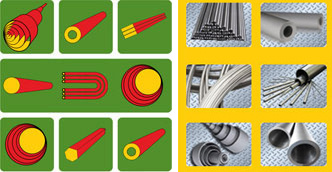
 Process VisualizationThe company's products are primarily used in industrial equipment sectors such as nuclear power, petroleum, petrochemicals, chemical engineering, power generation, automotive, shipbuilding, fertilizer production, pharmaceuticals, papermaking, sugar refining, and machinery manufacturing.
 -
 About UsTsisco Industrial Ltd. was established in 2010. Originating from the Tsingshan ecosystem’s Shanghai platform, the company now operates independently and focuses on global supply-chain integration, distribution, and import/export of steel and alloy materials. We achieved ISO 9001 certification from TÜV Rheinland in 2012, and ISO 9001, ISO 14001 and ISO 45001 certifications from LRQA in 2022. These accreditations underpin continuous improvement and stable performance in quality, environment, and occupational health & safety.
-
Products & Solutions
Stainless Steel Continuous Cast Bloom
Stainless Steel Continuous Cast Bloom
Stainless Steel Continuous Cast Bloom|Global Sourcing for Engineering & Procurement
1. Product Positioning and Scope of Use
1. Positioning and Definition: A stainless steel continuous casting rectangular bloom is a semi-finished product with a rectangular cross-section produced by EAF/BOF steelmaking with AOD or VOD refining, followed by tundish, mold, secondary cooling, straightening, and fixed-length cutting. Rectangular blooms are primarily used as upstream feedstock for forging, ring-rolling, sections and bars, and as mother stock for explosive cladding and machined components.
2. Industries Served: Petrochemical and chemical equipment, flange and fitting forging, offshore and shipbuilding, mining and construction machinery, power generation (including high-temperature parts), and non-wetted structural parts in food and pharmaceutical equipment.
3. Boundary with Adjacent Products: Slabs are preferred for coil and plate; round billets are typical for small-section long products and seamless tube piercing; rectangular blooms focus on forging/section routes and applications requiring large cross-sections and high soundness. Blooms are semi-finished products and are not used directly as final materials for pressure vessels or pipelines.
2. Standards Matrix (Procurement View)
Note: Rectangular blooms do not have a single universal product standard. Control is by contract on chemical composition, internal quality, dimensions, and surface, and is linked to downstream product standards.
1. Chemistry and Grade Mapping: ISO 15510 (stainless steel composition mapping), GB/T 20878 (China stainless and heat-resisting steel composition). Add windows for S, P, inclusion rating and morphology in the order when needed.
2. Steel Cleanliness and Inclusion Rating: ASTM E45 or ISO 4967.
3. Macrostructure and Segregation: ASTM E381 macroetch rating.
4. Internal Soundness and UT: Apply the mill’s in-house bloom UT procedure; by contract, you may reference the philosophy of EN 10160 (plate UT) to define coverage, zones, and equivalent reflector thresholds, and specify acceptance methods explicitly.
5. Test Certificates and Documents: EN 10204 Type 3.1 or 3.2.
6. Downstream Link Examples: Plates and coils per ASTM A240 or EN 10088-2; forgings per ASTM A182 or EN 10222 series; sections and bars per EN 10088-3 or ASTM A276. Establish the mapping in the technical agreement.
3. Scenario–Material–Standard–Size Mapping (Quick Selection)
1. Flanges, rings, and forged fittings: 304L, 316L, 321, 347 with EN 10204 certificates; typical bloom cross-sections with short side 150–300 mm and long side 200–500 mm; tighten macroetch and UT acceptance.
2. Seawater and high-chloride service forgings: Duplex 2205 and super duplex 2507 with controlled nitrogen and phase balance potential; strengthen center soundness and segregation control at bloom stage; common sections include 160×250 mm and 200×300 mm.
3. High-temperature oxidation and carburization-resistant parts: 310S, 253MA, 904L, 6Mo; control Ni, Mo, and N variation; set stricter UT thresholds for center porosity and shrinkage.
4. Mining and construction wear-resistant components (stainless grades): Martensitic 410, 420, 431 per project route; agree hot-working and heat-treatment schedules; size back-calculated from part layout with machining allowance.
5. Non-wetted structural parts in food and pharma: 304L, 316L with emphasis on surface cleanliness and low inclusions; section based on downstream machining allowance and fixturing stiffness.
6. Mother stock for explosive cladding and clad plate: 304L, 316L, 444, 2205 etc., emphasizing face cleanliness and corner integrity; choose sections that match target clad sizes to reduce trimming loss.
4. Size Range and Tolerances (Common Engineering Window)
1. Section Range: Short side approx. 120–400 mm; long side approx. 160–650 mm. Larger sections are possible at certain mills and must be confirmed.
2. Length Range: About 3.5–12 m, optimized to furnace, shear line, and forging pitch.
3. Geometry and Tolerance Principle: Use “mill standard plus contractual tolerances.” Quantify width/thickness deviation, diagonal difference, straightness, twist, and corner integrity in the order. Typical straightness control is in the order of millimeters per meter.
4. Grinding Depth: State the maximum single-side grinding depth, mark ground areas, and specify re-inspection methods to avoid layered defects during rolling or forging.
5. Identification and Traceability: Heat number, bloom number, position (head/middle/tail), and weight by barcode or spray mark.
5. Manufacturing Flow and Critical Controls
1. Steelmaking and Refining: EAF/BOF, AOD/VOD; vacuum and calcium treatment when needed. Control S, P, and inclusion type/size distribution; set a nitrogen window by grade.
2. Continuous Casting: Stabilize the solidification front and casting speed; optimize oscillation and mold powder; apply EMS and soft reduction to reduce center segregation and shrinkage, improve equiaxed zone and center soundness.
3. Straightening, Cut-to-Length, and Surface Re-inspection: Hot straightening; flame or plasma cutting; strict face and corner control; on-line/off-line scarfing and grinding to remove defects; re-inspect before downstream processing.
4. Grade Focus:
— Duplex and super duplex: control nitrogen and Cr/Mo variation to retain phase-balance potential for downstream heat treatment.
— Austenitic high-alloys: control Ni, Mo, N and inclusions; prevent corner and longitudinal cracks.
— Martensitic and precipitation-hardening grades: agree solution or aging windows by project; avoid overheating and grain coarsening.
6. Quality Inspection and Documentation
1. Chemistry and Cleanliness: Tap and ladle analyses; inclusion rating per ASTM E45 or ISO 4967; O/N/H and inclusion morphology when required.
2. Macrostructure: Macroetch per ASTM E381 with photos and ratings for center looseness, banded segregation, shrinkage, and cracks.
3. Ultrasonic Testing: Execute mill procedures; define coverage, zoning, equivalent reflector thresholds, and re-inspection flow in the contract; EN 10160-style levels may be used by analogy.
4. Dimensions and Appearance: 100% visual inspection; quantify width/thickness deviation, diagonal difference, straightness, and twist; after grinding, sample MT/PT and re-measure thickness.
5. Documents: EN 10204 Type 3.1 or 3.2 with chemistry, macroetch, UT, dimension and surface rectification records; full traceability heat-to-bloom-to-position.
7. Supply Condition and Packaging
1. Supply Condition: As-cast black surface or ground/conditioned surface; fixed length or mill random lengths.
2. Packaging and Protection: Corner and end protection; rust preventive oil or dry film; strapping and anti-slip blocks; clear marking and labeling for sea and road transport.
3. Cleanliness: For food and pharma non-wetted structures, specify cleanliness and contamination control clauses as required.
8. Ordering Checklist (Paste-Ready)
1. Grade and chemistry: e.g., “1.4404 (316L), S/P and inclusion window per contract.”
2. Size and tolerance: short side × long side × length; width/thickness deviation, diagonal difference, straightness/twist limits; corner integrity.
3. Internal quality: ASTM E381 sampling ratio and acceptance; UT coverage, zones, and equivalent thresholds.
4. Metallurgical capability: Statement of AOD/VOD, EMS, soft reduction, and casting parameter control.
5. Grinding and re-inspection: Maximum grinding depth, marking of ground areas, and re-inspection method.
6. Documents and witnessing: EN 10204 3.1/3.2; third-party witnessing when required; provide chemistry, macroetch, UT, dimension, and surface rectification records.
7. Downstream interface: If supplying directly to forging or ring-rolling, agree reheating window, head/tail cropping allowance, and surface conditioning level.
9. Material Selection Guide (One-Line Shortcuts)
304L/316L for general forgings; 2205/2507 for seawater and high-chloride service; 310S, 253MA, 6Mo and 904L for high-temperature and strong corrosion; martensitic grades for wear and high-strength parts; back-calculate bloom section from part layout and allow for machining and forging shrinkage.
10. Procurement, Construction, and O&M Risk Alerts
1. Confusing semi-finished with finished standards and applying ASTM A240/A312 directly to blooms; use the proper “chemistry + internal quality + dimensions and surface” logic.
2. Controlling only chemistry but not macroetch and UT leads to excessive center porosity/segregation and cracking; require E381 macroetch and UT acceptance.
3. Ignoring section/thickness category differences and applying thin-section indicators to large sections or vice versa.
4. No grinding limits or re-inspection clauses may cause perforation or layered defects; specify them in the contract.
5. Missing downstream interface clauses causing mismatches in cropping allowance, reheating window, and surface conditioning, hurting yield and cost.
11. Representative Specification Lines
1. “Stainless CC rectangular bloom, 1.4404 (316L), 180 mm × 280 mm × 6 m; macroetch per ASTM E381 accepted; UT 100% (level per contract); EN 10204 3.1.”
2. “Stainless CC rectangular bloom, S32205 (2205), 160 mm × 250 mm × 5.5 m; center soundness and segregation controlled; EN 10204 3.2; single-side grinding ≤ 3 mm and re-inspected OK.”
3. “Heat-resistant stainless CC rectangular bloom, 310S, 200 mm × 300 mm × 7.0 m; AOD/VOD; EMS and soft reduction; zoned UT acceptance; spray marking with heat, bloom number, and weight.”
12. Representative Global Producers (Examples, Alphabetical)
Acerinox/Columbus, Aperam, Baosteel Stainless, Jindal Stainless, NIPPON STEEL Stainless, Outokumpu, POSCO, TISCO, Tsingshan, Delong, YUSCO. Size windows, metallurgical routes, and control focus vary by mill; rely on mill datasheets and the contract for final capability confirmation.
Stainless Rectangular Bloom|Technical Specifications
I. Product Definition and Application Scope
1. Definition
A rectangular bloom is a long, rectangular cross-section semi-finished product obtained by continuous casting through tundish, mold, secondary cooling, straightening, and cut-to-length operations. Stainless blooms are typically melted via EAF/BOF with AOD/VOD refining. They serve as upstream feedstock for downstream hot working such as section rolling, ring rolling and open-die forging, conversion to round tube shells, and intermediate feed for plate/strip rolling.
2. Applicability Limits
• Downstream routes: heavy sections and rails (upstream feed), ring rolling and open-die forging, round-making for seamless tube piercing, and intermediate stock for plate/strip mills.
• Quality objectives: suitable where high internal soundness, low centerline segregation, low corner cracking, and superior surface integrity are required.
• Regulatory boundary: a bloom is a semi-finished product and not a final material for pressure vessels or pipelines; compliance and properties are established during subsequent hot rolling, heat treatment, and inspection.
3. Boundaries vs. Adjacent Processes
• Versus slab: slabs have higher width-to-thickness ratios and relatively thinner sections for plate and coil; blooms are thicker and closer to square sections for sections, forgings, and tube shells.
• Versus square billet: blooms generally have larger sections and a higher width-to-thickness ratio (commonly ~1:1 to 3:1), preferred for heavy-duty process chains.
• Very large diameter or extra-long straight pipe is more economically produced by mandrel/plug/step-rolling or plate-welded routes (UOE, LSAW, EFW). Furnace radiant tubes above ~900 °C should use centrifugal-cast heat-resistant alloys rather than blooms.
II. Standards & Normative Framework (by control dimension)
Note: A bloom is a semi-finished product. Control is established via chemistry, internal quality, dimensions, and surface on a “general-requirements plus purchase agreement” basis, linked to downstream product standards. Common combinations are:
1. Chemistry & Grade Mapping
• ISO 15510: international chemical mapping for stainless steels.
• GB/T 20878: Chinese grades and compositions for stainless and heat-resistant steels.
• Contract supplements: strengthened limits for S/P, inclusion rating and morphology, nitrogen targets, etc.
2. Cleanliness & Inclusion Rating
• ASTM E45 or ISO 4967: microscopic inclusion determination and rating.
3. Macrostructure, Segregation & Shrinkage Control
• ASTM E381: macroetch test to rate banded segregation, center cavities, porosity, and cracks on bloom samples.
4. Ultrasonic Testing & Internal Soundness (by agreement)
• Use mill internal UT procedures; engineering may adopt EN 10160 concepts (for plate UT) or an equivalent current method to define coverage, zoning, and reflectivity thresholds. Acceptance methodology must be stated in the contract.
5. Test Certificates & Dimensional Tolerances
• EN 10204 3.1 / 3.2: inspection certificates (MTC).
• Dimensions and tolerances: controlled by “mill standard plus contractual tolerances,” coordinated with downstream process capability.
III. Material Families & Typical Grades (examples, not exhaustive)
• Austenitic: 304, 304L, 316, 316L, 321, 347, 310S, 904L, 6Mo (UNS S31254).
• Ferritic & Super-clean Ferritic: 409L, 430, 439, 444, etc.
• Duplex & Super Duplex: 2205 (UNS S32205, 1.4462), 2507 (UNS S32750, 1.4410).
• Martensitic & Precipitation-hardening (subject to project capability and downstream heat treatment): 410, 420, 17-4PH, etc.
Note: At the bloom stage, focus on composition, cleanliness, centerline segregation, and surface. Mechanical properties are governed at downstream product stages.
IV. Manufacturing Route & Key Metallurgical Controls
1. Melting & Refining
• Melting: EAF/BOF.
• Refining: AOD/VOD with vacuum treatment or Ca-treatment when required.
• Key controls: low S/P; inclusion type/size distribution (Al-killed, Ca-treated, Si-Mn systems); nitrogen window (for austenitic/duplex).
2. Continuous Casting Controls
• Mold & secondary cooling: stable solidification front, proper withdrawal speed, vibration, and mold flux control to avoid longitudinal/corner cracks.
• EMS & soft reduction: reduce centerline segregation and shrinkage, increase central density and equiaxed fraction—standard practice for high-end stainless blooms.
• Straightening & cutting: hot straightening; oxy-fuel or plasma cut-to-length; strict end squareness and corner integrity; corner radius set where appropriate to mitigate corner cracking.
3. Surface & Corner Conditioning
• In-line/off-line grinding, scarfing, and surface dressing to remove entrapped slag, shell cracks, laps, and fold-type defects; re-inspect prior to hot working.
V. Dimensions, Length & Tolerances (engineering windows)
Use the following windows for planning; the contract shall reflect mill capability and agreed tolerances.
• Cross-section: thickness typically ~160–350 mm, width ~200–650 mm; some heavy-duty facilities exceed this window.
• Length: typically ~4–12 m, optimized to furnace and mill pitch.
• Shape/geometry: straightness, bow, and twist per mill/contract; rhomboidity and parallelism limits; specify corner radius.
• Conditioning & machining allowances: specify maximum single-side grinding depth, conditioning zones, and re-inspection; reserve allowances for downstream processing and limit eccentricity/ovalization tendencies.
VI. Quality Control & Testing (ITP backbone)
1. Chemistry & Cleanliness
• Heat/final spectral analysis; full traceability of heat–bloom–position.
• Inclusion rating per ASTM E45 or ISO 4967; O/N/H and inclusion morphology when needed.
2. Macrostructure
• Macroetch per ASTM E381 to assess center porosity, banded segregation, shrinkage, and cracks; photos and ratings recorded.
3. Internal Soundness (UT)
• Per mill procedures and contractual class; use EN 10160-style concepts to define coverage, zoning, reflectivity thresholds, and re-test protocol.
4. Surface Quality
• 100% visual examination; “mark–condition–re-inspect” loop for longitudinal/corner cracking, slag entrapment, laps, laminar inclusions, and sub-surface blowholes; after grinding, apply MT/PT sampling and re-measure thickness as needed.
5. Documentation & Release
• EN 10204 3.1/3.2 certificates (chemistry, macro, UT/NDE, dimensions).
• Retain in-plant records, defect disposition and re-inspection reports, and complete traceability lists before release.
VII. Service–Grade–Control Mapping (text quick-guide)
• General equipment & sections: 304L/316L blooms with low S/P, controlled inclusions, central soundness; EMS plus soft reduction.
• Marine/high-chloride chains: 2205/2507 blooms with nitrogen targets and phase-balance potential; downstream verification of phase balance and pitting resistance; stricter macro/UT control recommended.
• High-temperature oxidation/anti-carburization: 310S, 904L, 6Mo or Ni-alloy routes; emphasize Mo/Ni stability and center soundness.
• Ring rolling & open-die forging: heavy cross-section blooms with tight rhomboidity, straightness, and corner integrity; reserve cutoff/conditioning allowances.
• Tube-round conversion and piercing: medium-thick blooms converted to rounds; limit eccentricity and center porosity; pre-control inclusions and crack-sensitive zones.
VIII. Ordering Checklist (insert into RFQ/PO/Technical Agreement)
1. Grade & chemistry: ISO 15510/GB/T 20878 targets and permissible deviations; S/P/N and inclusion control.
2. Dimensions & tolerances: thickness × width × length; straightness, rhomboidity, parallelism, corner radius; maximum grinding depth and re-inspection method.
3. Internal quality: ASTM E381 sampling and rating; UT coverage, zoning, and acceptance classes.
4. Process capability: AOD/VOD; casting speed & secondary cooling; vibration; EMS & soft reduction statements.
5. Identification & traceability: heat, bloom number, position (head/middle/tail), barcoding; loading and stacking plan.
6. Documents: EN 10204 3.1/3.2; chemistry, macro, UT/NDE, dimensions, and defect disposition records.
7. Downstream interface: if shipped directly to external hot-working plants, agree surface conditioning class, allowable grinding marks, and reheating temperature window.
IX. Common Risks & Corrective Actions
• Confusing semi-finished with finished standards: do not impose plate/tube product standards on blooms; apply “chemistry + internal quality + dimensions & surface” logic.
• Chemistry-only control: without macro/UT acceptance, risks of centerline shrinkage/segregation and rolling cracks rise; mandatory macro and UT checks.
• Ignoring heavy-section specifics: do not apply thin-section criteria to heavy sections (or vice versa).
• Undefined grinding limits & re-inspection: over-grinding can cause piercing or lamination exposure; define limits and re-check.
• Missing downstream interface: misaligned head/tail crop, reheating window, and surface conditioning lead to poor yield.
X. Representative Dimension Windows (planning reference)
• Cross-section: thickness ~160–350 mm; width ~200–650 mm; heavy-duty mills may reach ~450 mm-class thickness or wider.
• Length: ~4–12 m.
Note: actual capability per mill manuals and PO confirmation.
XI. References & Engineering Basis (selected)
• Public continuous casting literature and OEM notes on EMS and soft-reduction.
• Industry comparisons of square billet, rectangular bloom, and slab section families and capability windows.
• Process overviews from major stainless mills showing typical bloom cross-section bands and downstream matches.
• Quality methods: ASTM E45, ISO 4967 (microscopic inclusions), ASTM E381 (macroetch), and EN 10160-style UT classification concepts.
XII. Example Purchase Lines (ready-to-use)
1. “Bloom, 1.4462 (2205), 280 mm × 450 mm × 8 m; macroetch per ASTM E381, centerline segregation acceptable; full-coverage UT per contract; EN 10204 3.2 certificate.”
2. “Bloom, 316L, 220 mm × 360 mm × 6 m; straightness ≤ 2 mm/m; single-side grinding ≤ 3 mm within 5% area; EN 10204 3.1 certificate.”
3. “Bloom, 310S, 250 mm × 400 mm × 7.5 m; EMS & soft-reduction capability statement; macro & UT records complete; end squareness and corner radius as per agreement.”
Tags: