-
 Industries OverviewThe company's products are primarily used in industrial equipment sectors such as nuclear power, petroleum, petrochemicals, chemical engineering, power generation, automotive manufacturing, shipbuilding, fertilizer production, pharmaceuticals, papermaking, sugar refining, and machinery manufacturing.
 -
 Products & SolutionsOur Products: Ferrous metal ore raw materials (nickel ore, ferronickel, ferrochrome, ferromanganese, ferrosilicon, etc.), seamless pipes, welded pipes, medium-thick plates, plate coils, bars, wire rods, wire coils, pipe fittings, flanges, castings, etc.
 -
 CommunityThe company has established an excellent reputation within the industry through its strong credibility, comprehensive services, and ample resources.
 -
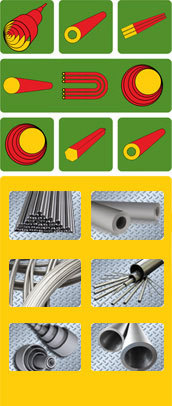
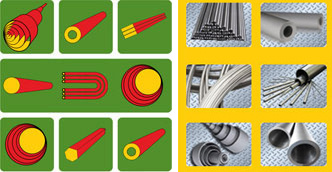
 Process VisualizationThe company's products are primarily used in industrial equipment sectors such as nuclear power, petroleum, petrochemicals, chemical engineering, power generation, automotive, shipbuilding, fertilizer production, pharmaceuticals, papermaking, sugar refining, and machinery manufacturing.
 -
 About UsTsisco Industrial Ltd. was established in 2010. Originating from the Tsingshan ecosystem’s Shanghai platform, the company now operates independently and focuses on global supply-chain integration, distribution, and import/export of steel and alloy materials. We achieved ISO 9001 certification from TÜV Rheinland in 2012, and ISO 9001, ISO 14001 and ISO 45001 certifications from LRQA in 2022. These accreditations underpin continuous improvement and stable performance in quality, environment, and occupational health & safety.
-
Products & Solutions
Stainless Continuously Cast Billets & Blooms
Stainless Continuously Cast Billets & Blooms

Stainless Steel Continuous Casting Square Billet|Global Sourcing for Engineering & Procurement
I. Product Positioning and Application Scope
1. Positioning
A stainless steel continuous casting square billet is a semi‑finished product with an equal‑side square section, produced by EAF/BOF steelmaking with AOD or VOD refining, followed by tundish feeding, mold solidification, secondary cooling, straightening and cut‑to‑length. It serves as feedstock for hot‑rolled bars and wire rod, sections, seamless tube piercing hollows, forging and ring rolling, and explosive clad plate mother plates.
2. Boundaries of Use
Intended for downstream chains that demand high internal soundness, low segregation, superior surface quality and dimensional consistency. As a semi‑finished product, the billet is not used as a final material for pressure vessels or pipelines; regulatory compliance is realized during downstream hot working and inspection.
3. Process Adjacency
Square billets primarily target long products and tube‑hollow routes; for hot‑rolled coil and plate, choose slabs; for very thick sections or special forgings, consider ingot‑based or ESR‑remelt plus breakdown routes.
II. Standards Matrix (by Control Dimension)
Note: Billets do not have a single “finished‑product” standard. Control is specified via chemistry, internal quality, dimensions and surface requirements, and aligned to downstream product standards.
1. Chemistry and Grade Mapping
ISO 15510 (stainless chemistry cross‑reference); GB/T 20878 (Chinese grades and chemistry). Purchase orders may tighten S/P limits and inclusion grade/shape windows.
2. Metallurgical Cleanliness & Inclusions
ASTM E45 or ISO 4967 (microscopic inclusion rating).
3. Macrostructure & Segregation/Shrinkage
ASTM E381 (macroetch to evaluate banded segregation, center cavities, porosity and cracks).
4. Ultrasonic Testing & Soundness (as agreed)
Per manufacturer’s internal UT procedure; projects may borrow EN 10160 plate‑UT concepts to define coverage, zones and reflector‑equivalent thresholds, stated explicitly in the contract.
5. Certification & Documentation
EN 10204 3.1 or 3.2 (MTC). Link the billet controls to downstream standards (e.g., ASTM A479, ASTM A276, EN 10088‑3, ASTM A312) in the technical agreement.
III. Scenario–Material–Standard–Size Mapping (Quick Selection)
1. Billets for hot‑rolled bars and sections
Materials: 304L, 316L, 321, 430, 2205. Controls: ISO 15510/GB/T 20878 chemistry; E381 macroetch; UT per PO. Size: side 120–200 mm, length 6–12 m.
2. Piercing hollows for seamless tubes
Materials: 304L, 316L, TP321, TP347, S32205. Controls: align chemistry to downstream A312/A213/A789 windows; tighter eccentricity and end‑face controls. Size: side 140–200 mm (per mill capability).
3. Billets for forging and ring rolling
Materials: 304L, 316L, 17‑4PH, S32205, S32750. Controls: E45/ISO 4967 inclusion rating, E381 macroetch; declare ESR where required. Size: side 160–220 mm.
4. Mother billets for explosive clad plate
Materials: 304L, 316L, 904L, 6Mo. Controls: chemistry stability (Mo/N/Ni) and center soundness; size per cladding layout (commonly side 150–200 mm, fixed length).
5. Marine/high‑chloride chains (bars/tubes)
Materials: 2205, 2507. Controls: nitrogen window and phase‑balance potential (achieved downstream via solution anneal), strengthened UT and macro‑segregation control. Size: side 150–200 mm.
IV. Size Range and Tolerances (Common Engineering Window)
1. Side dimension: typically 120–200 mm; some lines up to 220–240 mm.
2. Length: about 4–12 m (optimized to reheating and rolling pitch).
3. Corner radius: typically R 5–15 mm (mold‑dependent).
4. Straightness and twist: typical upper limits of a few millimeters per meter, to be specified in the PO.
5. Cutting and ends: specify squareness and flatness; remove hot‑cut burrs and cracks and re‑inspect.
6. Allowable grinding: define maximum single‑side grinding depth, marking and re‑inspection to secure rolling/piercing yield.
Note: These are planning windows; final scope follows mill capability and PO agreement.
V. Manufacturing Flow and Key Controls
1. Steelmaking & Refining: EAF/BOF → AOD/VOD → optional vacuum treatment and Ca‑treatment → continuous casting.
2. Casting & Secondary Cooling: stabilize solidification front, match withdrawal speed, manage oscillation and mold powder to prevent longitudinal/corner cracking.
3. EMS & Soft Reduction: reduce center segregation and shrinkage, improve center soundness and equiaxed fraction.
4. Straightening & Cutting: hot straightening; flame or plasma cut‑to‑length; control end‑face and corner quality.
5. Surface Conditioning: on‑line/off‑line grinding, scarfing and re‑inspection to remove entrapped slag, shell cracks, laps and sub‑surface blowholes.
VI. Quality Inspection and Documentation
1. Chemistry & Cleanliness: tap/ladle OES; E45/ISO 4967 inclusion rating; O/N/H and morphology if needed.
2. Macrostructure: ASTM E381 macroetch rating with photo records.
3. Internal Soundness: UT per manufacturer procedure and contractual level; adopt zone/coverage plus reflector‑equivalent thresholds where applicable.
4. Surface Quality: 100% visual; closed loop “mark–grind–re‑inspect”; MT/PT sampling after grinding and thickness re‑check.
5. Dossier: EN 10204 3.1 or 3.2 including chemistry, macroetch, UT/NDE and dimensions; defect disposition and re‑inspection records; heat–billet–position traceability.
VII. Supply Form and Packaging
Delivered in bundles or rows; corner protection and lift lugs as needed; paint/ink marking or stamping of heat, billet ID, grade, size and weight; anti‑slip and blocking for land/sea transport; moisture protection as required, with loading/stacking diagrams.
VIII. Ordering Checklist (Copy‑Ready)
1. Grade & chemistry: target and tolerances per ISO 15510/GB/T 20878 including S/P/N and inclusion control.
2. Size & tolerances: side × length; straightness, twist, end squareness, corner integrity; max grinding depth.
3. Internal quality: ASTM E381 sampling ratio and acceptance; UT coverage and thresholds (method and revision stated).
4. Metallurgy: AOD/VOD, EMS/soft reduction capability; declare ESR or secondary refining if required.
5. Traceability & docs: EN 10204 3.1/3.2 with chemistry, macroetch, UT, dimensions and re‑inspection records.
6. Downstream interface: for direct supply to rolling/piercing, define surface conditioning grade, crop length at head/tail and reheating window.
IX. Grade Selection Guide (One‑liners)
General long‑product chain: 304L/316L; chloride‑bearing: 2205/2507; high‑temperature oxidation/strong corrosion: 310S/904L/6Mo; forging/ring rolling needing high soundness: consider remelt and tighter macro+UT classes.
X. Procurement, Installation & O&M Risk Alerts
Do not apply finished‑product standards directly to billets; chemistry‑only control without macro/UT risks center cavities and segregation; do not ignore differences among thin, standard and large‑section billets; always define grinding limits and re‑inspection; align interfaces with downstream mills.
XI. Representative Line Items (Examples)
1. “Stainless CC square billet, grade 1.4404 (304L), 160 mm side × 6.0 m; AOD, EMS + soft reduction; ASTM E381 macroetch acceptable; UT full coverage per mill procedure; EN 10204 3.1.”
2. “Stainless CC square billet, grade S32205 (2205), 180 mm side × 8.0 m; chemistry per ISO 15510; E381 acceptable; UT zoned coverage with agreed E‑level thresholds; EN 10204 3.2 (third‑party witness).”
3. “Stainless CC square billet, grade 310S, 150 mm side × 6.0 m; AOD/VOD; end‑face quality and max grinding depth per PO; E381 & UT acceptable; EN 10204 3.1.”
XII. Representative Global Producers (Alphabetical, Examples)
Acerinox (incl. Columbus Stainless), Aperam, Baosteel Stainless, Delong, Jindal Stainless, Nippon Steel Stainless, Outokumpu, POSCO Stainless, TISCO, Tsingshan, ZPSS, YUSCO, etc. Mill capability windows vary; follow mill datasheets and contract.
Continuous Cast Stainless Billet|Technical Specification
1. Product Definition and Scope
1. Definition
A continuous casting stainless billet is a square or near-square semi-finished product obtained by EAF/BOF steelmaking followed by AOD or VOD secondary refining, and then teeming through tundish, mold, secondary cooling, straightening and fixed-length cutting. It serves as feedstock for hot-rolled bars and wire rod, forging, seamless piercing for tubes, ring rolling and other downstream routes. Billets, blooms and slabs are classified as semi-finished steel products.
2. Applicability
• Downstream routes: bar and wire rod rolling, mechanical forgings, seamless tube piercing, ring rolling and pre-forging feedstock.
• Quality intent: chains demanding high center soundness, low segregation/cracks and clean surfaces.
• Regulatory boundary: billets are not final materials for pressure vessels or pipelines; compliance is achieved at the downstream product stage (e.g., bar, wire, seamless tube).
3. Boundary to adjacent processes
• Section classes: billet (square) and bloom (rectangular) are semi-finished forms; different section sizes map to different rolling/forging windows.
• Fit: billets mainly target long products and seamless routes; rectangular blooms can serve heavy bars and ring-rolling feed.
2. Standards & Normative Matrix (by control dimension)
Note: As semi-finished products, billets are controlled by chemistry, internal quality, dimensions and surface via mill standards and purchase agreements, and then linked to downstream product standards (bar, wire, tube, etc.).
1. Chemistry & grade mapping
• ISO 15510: International composition mapping for stainless steels.
• GB/T 20878: Chinese grades and compositions for stainless and heat-resisting steels.
• Order addenda: specify stricter limits for S/P, inclusion ratings and inclusion morphologies.
2. Cleanliness & inclusions
• ASTM E45 / ISO 4967 for inclusion assessment (method and rating).
3. Macrostructure & segregation/shrinkage
• ASTM E381 macroetch to rate banded segregation, center porosity/shrinkage and cracks on billet samples.
4. Ultrasonic testing & soundness (as agreed)
• Billet UT is typically per mill internal procedures. Projects may adopt EN 10308 (UT of steel bars) concepts for coverage/zonation/echo-height thresholds or use a current equivalent such as ASTM A388/A388M (UT of forgings); note that historical SEP 1921 is withdrawn and a current method shall be specified in the contract.
5. Certification & documents
• EN 10204 3.1/3.2 for MTC;
• Establish chemistry/cleanliness linkage to the downstream product standard (bar/wire/tube) within the PO/technical agreement.
3. Materials & Typical Grades (examples, not exhaustive)
• Austenitic: 304/304L, 316/316L, 321, 347, 310S, 904L, 6Mo (UNS S31254).
• Ferritic / Super-clean Ferritic: 409L, 430, 439, 444, etc.
• Duplex / Super Duplex: 2205 (UNS S32205/1.4462), 2507 (UNS S32750/1.4410).
• Nickel alloys (project dependent): 800H/HT, 825, 600/601, 625, C-276, etc.
• Precipitation hardening: 17-4PH (solution/aging done downstream).
Note: At the billet stage, the focus is chemistry, steel cleanliness, center soundness and surface integrity; mechanical properties are accepted at downstream bar/wire/forging/tube stages.
4. Manufacturing Route & Key Metallurgical Controls
1. Steelmaking & refining
• EAF/BOF primary melting;
• AOD or VOD secondary refining; optional vacuum and calcium treatment;
• Controls: low S/P, inclusion type/size distribution (Al-killed/Ca-treated, Si-Mn), and nitrogen window for austenitic/duplex grades.
2. Continuous casting controls
• Solidification: mold heat flux and powder control, speed matching, oscillation parameters and secondary cooling to prevent longitudinal/corner cracks;
• EMS and Soft Reduction: reduce center segregation and shrinkage, improve center soundness and equiaxed fraction—state-of-the-art practice on high-end stainless billets.
• Straightening & cutting: hot straightening; flame/plasma cutting to length; strict end face and arris control.
3. Surface conditioning
• In-line/off-line grinding/scarfing to remove entrapped slag, shell cracks, laps and other defects; re-inspect surfaces prior to dispatch.
5. Dimensions, Lengths & Tolerances (typical engineering windows)
For planning only—contractual capability and tolerances are per mill standard.
• Common square sections: 120×120, 140×140, 150×150, 160×160, 180×180, 200×200, 220×220 mm; stainless long-product mills publicly list typical as-cast sizes such as 160×160, 180×180, 210×210 mm.
• Lengths: approx. 6–12 m (optimized to furnace and mill pitch).
• Corner radius/chamfer: per mill practice and PO.
• Dimensional & shape tolerances: mill standard + PO; where an international analogy is requested, specify max. side-to-side difference, corner radius and straightness explicitly in the contract to secure downstream rolling/piercing stability.
6. Quality Control & Testing (ITP backbone)
1. Chemistry & cleanliness
• Heat and product analyses with full traceability (heat–billet–position);
• Inclusion rating per ASTM E45 / ISO 4967; supplement O/N/H and inclusion morphology if required.
2. Macrostructure
• Macroetch per ASTM E381 with photo records and rating for center soundness/segregation/shrinkage/cracks.
3. UT soundness
• Per mill UT procedure and agreed acceptance class; EN 10308 concepts for coverage/zonation/echo-height may be adopted; define defect location and re-test protocol.
4. Surface quality
• 100% visual; “mark–condition–retest” loop for longitudinal/transverse/corner cracks, slag entrapment, laps, laminations and sub-surface porosity; MT/PT spot checks post-conditioning as needed.
5. Documentation & release
• EN 10204 3.1/3.2 MTC with chemistry, macroetch, UT/NDE and dimensional records; plant inspection records and traceability list.
7. Service–Grade–Standard–Size Mapping (text quick guide)
• General corrosion-resistant long-product chain: 304L/316L, 160×160–200×200 mm; low S/P, high cleanliness and center soundness; downstream to bar/wire.
• Seawater/chloride service chain: 2205/2507, 160×160–210×210 mm; nitrogen window and phase-balance potential (realized by downstream solution treatment); tighter UT and macro segregation control recommended.
• High-temperature/anti-carburization chain: 310S, 904L, 6Mo or Ni-alloys (600/625/825/C-276, etc.); emphasize Ni/Mo stability and center soundness.
• Seamless tube piercing mother billet: 304L/316L/321/347, 2205; typically 150×150–200×200 mm; control eccentricity and side-to-side variation for stable piercing.
• Heavy forging/ring-rolling feedstock: 316L/2205/625; prefer 180×180–220×220 mm; maximize center soundness and low segregation.
8. Ordering Essentials (copy-ready for RFQ/PO/Spec)
1. Grade & chemistry: ISO 15510/GB/T 20878 mapping with target and permissible deviations incl. S/P/N and cleanliness controls.
2. Dimensions & tolerances: side×side×length; straightness, side-to-side difference, corner radius and end squareness; max grinding depth and re-inspection.
3. Internal quality: macroetch per ASTM E381 (ratio & rating); UT coverage/class/zonation/echo thresholds (EN 10308 concept or current equivalent).
4. Metallurgical controls: AOD/VOD capability, EMS/soft reduction and secondary cooling practice statement (vendor/mill capability, as applicable).
5. Identification & traceability: heat–billet–position with barcode; loading and stacking mode.
6. Documents: EN 10204 3.1/3.2; chemistry, macroetch, UT/NDE, dimensions, surface conditioning & re-inspection.
7. Downstream interface: if direct to external rolling/piercing plants, agree surface conditioning class, allowable grind marks and reheating window.
9. Common Risks & Remedies
• Confusing semi-finished with finished standards: do not impose ASTM A240/A312 finished requirements on billets; use the semi-finished control logic of chemistry + internal quality + dimensions/surface.
• Chemistry-only control: without macro/UT you risk center shrinkage/segregation beyond limits and downstream cracking—macroetch and UT are mandatory.
• Mis-applying tolerances: do not copy plate/bar tolerances onto billets (or vice versa); define billet-specific acceptance in the contract.
• Undefined conditioning depth/re-test: over-grinding may cause piercing failures or lamination exposure; set limits and re-test steps.
• Missing downstream interface: head/tail crop, reheating window and surface class not aligned—hurts yield and surface class.
10. Representative Spec Lines (copy-ready)
1. Piercing mother billet (304L):
“CC billet: 304L, 160×160 mm × 6 m; low S/P & cleanliness per spec; macroetch per ASTM E381; UT coverage/echo thresholds per agreement (EN 10308 concept); EN 10204 3.1.”
2. Duplex bar chain (2205):
“CC billet: S32205 (2205), 180×180 mm × 8 m; AOD/VOD + EMS/soft-reduction capability statement; macroetch & UT per spec; EN 10204 3.1.”
3. Nickel alloy forging feed (Alloy 625):
“CC rectangular bloom: N06625, 210×210 mm × 6 m; chemistry per ISO 15510 mapping & mill datasheet; UT per agreement; EN 10204 3.2 (TPI).”
11. Representative Global Producers (alphabetical, examples)
Acerinox/NAS, Aperam, Outokumpu, POSCO, Jindal Stainless, Nippon Steel Stainless (NSSC), Nippon Yakin, TISCO, Tsingshan, Delong, ZPSS, YUSCO—public sources show stainless steelmaking and continuous casting (slab/bloom/billet) capabilities feeding bar/wire/tube chains; several publish typical semi-product size windows.
12. References & Engineering Basis (selected)
• EN 10079 definitions (semi-finished: billet/bloom/slab).
• ASTM E45 / ISO 4967 inclusion rating.
• ASTM E381 macroetch.
• EN 10308 UT of steel bars (concepts for coverage/zonation/echo).
• EMS & soft-reduction deployment in CC (equipment/vendor & mill brochures).
• Stainless semi-product (billet/bloom/slab) size examples.
Tags: