-
 Industries OverviewThe company's products are primarily used in industrial equipment sectors such as nuclear power, petroleum, petrochemicals, chemical engineering, power generation, automotive manufacturing, shipbuilding, fertilizer production, pharmaceuticals, papermaking, sugar refining, and machinery manufacturing.
 -
 Products & SolutionsOur Products: Ferrous metal ore raw materials (nickel ore, ferronickel, ferrochrome, ferromanganese, ferrosilicon, etc.), seamless pipes, welded pipes, medium-thick plates, plate coils, bars, wire rods, wire coils, pipe fittings, flanges, castings, etc.
 -
 CommunityThe company has established an excellent reputation within the industry through its strong credibility, comprehensive services, and ample resources.
 -
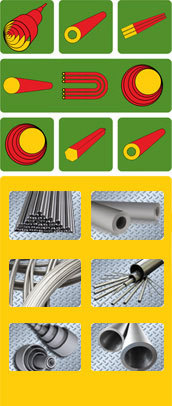
 Process VisualizationThe company's products are primarily used in industrial equipment sectors such as nuclear power, petroleum, petrochemicals, chemical engineering, power generation, automotive, shipbuilding, fertilizer production, pharmaceuticals, papermaking, sugar refining, and machinery manufacturing.
 -
 About UsTsisco Industrial Ltd. was established in 2010. Originating from the Tsingshan ecosystem’s Shanghai platform, the company now operates independently and focuses on global supply-chain integration, distribution, and import/export of steel and alloy materials. We achieved ISO 9001 certification from TÜV Rheinland in 2012, and ISO 9001, ISO 14001 and ISO 45001 certifications from LRQA in 2022. These accreditations underpin continuous improvement and stable performance in quality, environment, and occupational health & safety.
-
Products & Solutions
Cu-Ni ( Copper-Nickel ) Alloy Tubes & Pipes
Cu-Ni ( Copper-Nickel ) Alloy Tubes & Pipes

Cu-Ni ( Copper-Nickel ) Alloy Tubes & Pipes|Global Sourcing for Engineering & Procurement
1. Product Positioning and Scope
Copper-nickel tubing serves seawater and brine duties across marine and offshore fire-water, ballast, cooling-water and bilge lines; desalination evaporator/condenser sections; coastal and nuclear/conventional power plant cooling; near-shore petrochemical utilities; seawater intake/discharge and aquaculture lines; and long-life condenser/heat-exchanger bundles. It combines resistance to pitting/crevice attack and erosion with solid manufacturability.
2. Standards Matrix (by use and region)
United States
ASTM B111 (seamless condenser/HX tubes), ASTM B466 (seamless engineering pipe/tube), ASTM B467 (welded engineering pipe); ASME B31.1/B31.3 (piping codes—allowables per code tables); ASME B16.24 (cast copper-alloy flanges and flanged fittings).
EU/DE
EN 12451 (seamless round tubes for condensers/heat-exchangers), EN 12449 (seamless round tubes for general purposes), DIN 86019 (marine Cu-Ni pressure pipes, PN10/PN14).
Marine/Offshore
EEMUA 234 (materials, dimensions, flanges/fittings, pressure classes—typ. 16/20 bar), BS MA 18 (marine seawater practice and recommended velocities).
China GB/T
GB/T 5231 (chemistry for wrought copper/copper-alloys incl. BFe10-1-1≈90/10, BFe30-1-1≈70/30), GB/T 1527 (drawn copper/copper-alloy tubes), GB/T 8890 (seamless copper/copper-alloy tubes for heat exchangers).
General NDE & Compliance
Eddy-current (ASTM E243), ultrasonic (ASTM E213), pressure test and dimensional tolerances per the selected product standard; class and conformity per LR, DNV, ABS, BV and, where required, PED and ISO 9001/14001/45001.
3. Scenario—Material—Standard—Size Mapping (engineering guidance)
• Seawater mains and branches (clean waters): 90/10 (UNS C70600/C70620) to EEMUA 234 or DIN 86019 pressure/size sets; define minimum operating velocities to suppress deposition and fouling.
• High-turbulence/erosion spots (pump discharge, tight bends, reducers, throttling valves): Prefer 70/30 (UNS C71500/C71520) and/or thicker walls, larger bend radii and flow conditioning.
• Desalination evaporator/condenser: Use 70/30 in high-erosion segments and 90/10 elsewhere under the same family of OD/WT; apply the chosen EEMUA/EN/ASTM provisions.
• Condenser/HX bundles: ASTM B111 or EN 12451; U-bends to TEMA with geometry, thinning and re-NDE (ET + hydro).
4. Size Range and Tolerances (typical capability—confirm with standard and mill)
• Condenser/HX tubes (ASTM B111, EN 12451): common OD 12.7–25.4 mm, typical WT around BWG 22–16 (~0.7–1.65 mm), length 3–9 m; U-bends per TEMA.
• Engineering pipes (ASTM B466/B467, EEMUA 234, DIN 86019): EEMUA DN ~159–914 mm (6–36 in) at 16/20 bar; DIN PN10/PN14, DN 10–600+; straight lengths 6 m/12 m; PE/BE ends, with optional expanded/socket ends. Tolerances and straightness per the selected standards; HX tubes may require tighter OD/WT/oval/straightness for tube-to-tubesheet expansion fit.
5. Manufacturing Process and Critical Controls
• Seamless (B111/B466): melt → ingot/continuous cast → hot extrusion → multi-pass cold draw/roll with inter-anneals → size/straighten → solution (as required) → clean → final inspection.
• Welded (B467): uncoil and slit → form → GTAW/GMAW with adequate ID/OD shielding → anneal → straighten → NDE → pressure test.
• Welding and repair: ERNiCu-7 filler recommended; control heat input/interpass, slow cool and clean; keep bevels metallic-clean; avoid ferrous contamination.
• Flanges and joints: ASME B16.24 cast copper-alloy flanges, lap-joint with Cu-Ni stub ends, or steel–Cu-Ni composite/loose flanges.
• Pre-filming and chemical cleaning: FeSO₄ pre-film per owner/class; when cleaning is needed, use Cu-Ni-compatible chemistry under tight control; avoid ammonia/sulfide service.
6. QA/QC and Documentation
Chemistry and mechanicals; flattening, flaring and reverse-bend for HX tubes; NDE including 100% ET (ASTM E243) for HX tubes, UT (ASTM E213) and weld RT as applicable for engineering pipe; pressure tests per the product standard; dimensional/visual checks and U-bend geometry/thinning records; documentation: EN 10204 3.1/3.2 MTCs, NDE/pressure/size reports, with class witnessing where specified.
7. Supply Forms and Packaging
Supply as straight lengths, coils, HX tubes and U-bends; PE/BE ends, expanded/socket ends available; packaging with end caps, moisture and salt-spray protection; crated or framed, with internal dunnage and barrier films; external weather protection; full traceability via grade/size/standard heat/lot/order markings.
8. Ordering Checklist (BOM/RFQ)
Standards and grades (e.g., ASME SB466 C70620 seamless / ASME SB467 C71520 welded / ASTM B111 C70600 HX tubes); dimensions and pressure (engineering pipe DN/OD×WT×length; HX tube OD×WT [or BWG]×length; EEMUA 16/20 bar or DIN 10/14 bar); end prep and forming (PE/BE, expanded/socket, U-bend radius/unfolded length/minimum straight legs); welding and connections (ERNiCu-7 filler, flange/connector standards, isolation and CP).
9. Alloy Selection Guide (trade-offs between 90/10 and 70/30)
90/10 balances cost and life for mains/branches; 70/30 offers higher erosion-corrosion resistance and higher allowable velocities—prefer at pump discharges, tight bends, reducers and throttling points. In polluted waters or long lay-ups, prefer 70/30 or adopt pre-filming, minimum-velocity management and periodic flushing.
10. Procurement, Construction and O&M Risk Notes
Do not mix B111 (HX tubes) with B466/B467 (engineering pipe); never treat AWWA pressure classes as ASME Classes; respect the dimensional system differences between EEMUA/DIN and Schedule; provide isolation to prevent galvanic coupling to carbon steel or stainless; for high-turbulence zones use 70/30 or thicker walls/large radii; conduct pre-filming prior to service and define lay-up/flush plans; specify 100% ET for HX tubes and weld RT/UT as required; protect ID surfaces during packing to avoid dents and salt-fog attack.
11. Representative Spec Lines (copy-ready for RFQ/PO)
• Offshore fire/cooling main (EEMUA 234): EEMUA 234 Cu-Ni 90/10 (C70600 equiv.), DN 400, 16 bar; lap-joint with Cu-Ni stub end, ERNiCu-7 filler; UT spot + weld RT at critical joints; MTC 3.1 with NDT/hydro reports.
• Pump discharge tee and first bend (high-erosion zone): EEMUA 234 Cu-Ni 70/30 (C71500), DN 300, 20 bar; large-radius bend or thicker wall with isolation joints; 100% weld RT; MTC 3.1.
• Condenser tube bundle: ASTM B111 C70600, U-bends per TEMA; OD 19.05 mm, WT 1.24 mm, length 7.5 m; 100% ET + hydro and post-U-bend re-NDE; MTC 3.1 with dimension/NDT/hydro reports.
• Desalination mixed-alloy plan: ASTM B111 C71500 for high-erosion sections, ASTM B111 C70600 elsewhere; pre-film on start-up + low-dose residual chlorine with periodic flushing; full ET/hydro; MTC 3.1/3.2 as required.
12. Representative Global Producers (alphabetical, examples)
Furukawa Electric, KME Group, Mueller Industries / Wolverine, Poongsan, Wieland Group; in China, select marine Cu-Ni vendors with class approvals and PED/EN 10204 3.2 capabilities (request latest system certificates and recent references at RFQ).
Cu-Ni ( Copper-Nickel ) Alloy Tubes & Pipes|Technical Specification
1. Product definition and scope
• Definition: Cu-Ni (90/10, 70/30) tubing/piping for seawater/brine systems, ships and offshore platforms, desalination plants, coastal power-plant cooling, and condenser/heat-exchanger tube bundles; combines resistance to pitting/crevice and erosion-corrosion with good fabricability.
• Industries: Marine and offshore (fire-water, ballast, cooling, bilge), desalination (evaporator/condenser), coastal and conventional/nuclear power cooling water, near-shore petrochemical utilities, seawater intake/discharge, aquaculture lines, and HX/condenser bundles.
2. Standards matrix and design references
• US ASTM/ASME
– ASTM B111 / ASME SB111: seamless copper/copper-alloy tubes for condensers/heat-exchangers.
– ASTM B466 / ASME SB466: seamless Cu-Ni pipe and tube (engineering piping).
– ASTM B467 / ASME SB467: welded Cu-Ni pipe (engineering piping).
– ASME B31.1 / B31.3: piping design codes (allowables per code tables).
– ASME B16.24: cast copper-alloy flanges/flanged fittings (commonly used with Cu-Ni systems).
• EU/DE
– EN 12451: seamless round copper/copper-alloy tubes for condensers/heat-exchangers.
– EN 12449: seamless round copper/copper-alloy tubes for general purposes.
– DIN 86019: marine Cu-Ni pressure pipes (PN 10/14 series).
• Marine/Offshore
– EEMUA 234: Cu-Ni systems for seawater/fire/ballast—materials, dimensions, flanges/fittings, pressure classes (e.g., 16/20 bar).
– BS MA 18: marine seawater practice and recommended velocities.
• China GB/T
– GB/T 5231: chemical composition for wrought copper/copper-alloys (BFe10-1-1 ≈ 90/10, BFe30-1-1 ≈ 70/30).
– GB/T 1527: drawn copper and copper-alloy tubes.
– GB/T 8890: seamless copper/copper-alloy tubes for heat exchangers.
• General NDE and tests (selected)
– ASTM E243: eddy-current examination of copper/copper-alloy tubes.
– ASTM E213: ultrasonic examination of metal pipe/tube (as applicable).
– Hydro/pneumatic tests and dimensional tolerances per the product standard.
• Classification and certification
– LR/DNV/ABS/BV class; PED and ISO 9001/14001/45001 as project requires.
3. Alloys and grade mapping (typical engineering choices)
• 90/10 family: UNS C70600 (CuNi10Fe1Mn), with C70620 often used for weldability; CN designation approx. BFe10-1-1.
• 70/30 family: UNS C71500 (CuNi30Mn1Fe or CuNi30Fe2Mn2), with C71520 for welding; CN designation approx. BFe30-1-1.
• Selection guidance
– 70/30 provides higher erosion-corrosion resistance and higher allowable velocities than 90/10—prefer at pump discharge, tight bends, reducers, throttling locations.
– 90/10 suits mains/branches to balance cost and life; upgrade to 70/30 for polluted waters or high-turbulence zones.
– Not recommended for H₂S-bearing hydrocarbons; polluted seawater requires pre-filming/water-quality control and minimum velocity management.
4. Dimensions and supply capability (typical—confirm with standard and mill)
• Condenser/HX tubes (ASTM B111 / EN 12451): OD 12.7–25.4 mm (common 19.05/25.4), WT approx. BWG 22–16 (~0.7–1.65 mm), length 3–9 m; U-bends per TEMA.
• Marine/engineering pipes (ASTM B466/B467, EEMUA 234, DIN 86019): EEMUA DN ~159–914 mm (6–36″) with 16/20 bar classes; DIN PN 10/14 DN 10–600+; 6 m/12 m straight lengths; PE/BE ends; socket/expanded ends as required.
• Tolerances and straightness per standard; HX tubes may require tighter OD/WT/oval/straightness for expansion fit.
5. Manufacturing and welding (process controls)
• Seamless (B111/B466): melt → cast/continuous cast → hot extrusion → multi-pass cold draw/roll with inter-anneals → size/straighten → (as needed) anneal → clean → final inspection.
• Welded (B467): uncoil and slit → form → GTAW/GMAW with adequate ID/OD shielding → anneal → straighten → NDE → pressure test.
• Welding and repair: use ERNiCu-7 or equivalent Cu-Ni 30 filler; control heat input/interpass; slow cool and clean; keep bevels metallic-clean and oil-free; avoid ferrous contamination.
• Flanges and joints: ASME B16.24 cast copper-alloy, lap-joint with Cu-Ni stub ends, or steel-CuNi composite/loose flanges to combine strength and corrosion resistance.
• Pre-filming/chemical cleaning: FeSO₄ pre-film per owner/class procedures; if cleaning is needed, use Cu-Ni-compatible chemistry with tight control; avoid ammonia/sulfide exposure.
6. Service—alloy—standard—velocity guidance (project-level)
• Mains/branches in clean seawater: 90/10 to B466/EEMUA/DIN with owner-specified minimum velocity to avoid deposition/fouling; define flushing strategy for lay-ups/polluted waters.
• High-turbulence/erosion-prone spots (pump discharge, tight bends, reducers, throttling valves): 70/30, and/or thicker walls, larger bend radii, flow conditioning.
• Desalination evaporator/condenser: combine 70/30 (high-erosion segments) with 90/10 (general segments) to balance cost and life.
• Condenser/HX bundles: B111 (C70600/20 or C71500/20), with post-U-bend local heat-treatment and re-NDE (ET + hydro) as required.
• Water-quality management: avoid sulfide contamination and long stagnation; maintain owner-specified residual chlorine and monitoring; stabilize operation after pre-filming.
7. QA/QC and testing (ITP outline)
• Chemistry/mechanics: spectrometry (Cu/Ni/Fe/Mn), tensile/elongation/hardness; flattening/flaring/reverse-bend for HX tubes.
• NDE: 100% eddy-current (ASTM E243) for HX tubes; UT (ASTM E213)/RT (welds) for engineering pipe; MT/PT for fittings/welds.
• Pressure tests: hydro or pneumatic per B111/B466/B467/EN 12451/12449/EEMUA/DIN and PO.
• Dimensions and visual: OD/WT/oval/straightness, end prep; U-bend geometry and thinning records.
• Corrosion verification (as needed): flow-induced or pitting assessment, pre-film efficacy checks.
• Documentation: EN 10204 3.1/3.2 MTC, NDE/pressure/size reports; class witnessing as specified.
8. Construction and O&M essentials
• Joints and assembly: insulating kits at dissimilar interfaces; clean ID free of iron debris; smooth root profile, no spatter; protect internal surfaces.
• Supports: avoid point loading; control vibration at pump discharge and elbows.
• Commissioning and pre-filming: FeSO₄ pre-film and controlled ramp-up; maintain minimum operating velocity.
• Water quality: monitor sulfides/chlorine/deposits; implement flushing/chemical maintenance when required.
• Cathodic protection: coordinate with system CP to avoid over-protection issues.
9. Supply and packaging
• Forms: straight pipes, coils, HX tubes, U-bends; PE/BE; expanded/socket ends if required.
• Packaging: end caps + moisture protection + wooden cases/frames; inner liners; rain/salt-spray protection; labels with grade/size/standard/heat/lot/PO.
• Traceability: full heat/lot trace; LR/DNV/BV/ABS/SGS/TÜV witnessing available.
10. RFQ/PO checklist
1). Standards and grades: e.g., “ASME SB466 C70620 seamless / ASME SB467 C71520 welded / ASTM B111 C70600 condenser tubes”.
2). Dimensions and pressure class: DN/OD×WT×L for piping; OD×WT (or BWG)×L for HX tubes; pressure class EEMUA 16/20 bar or DIN 86019 PN 10/14.
3). Ends and forming: PE/BE, expanded/socketed ends, U-bend geometry (R, developed length, S_min).
4). Welding/joints: filler (e.g., ERNiCu-7), flange/joint standard (B16.24/EEMUA), insulating kits and CP requirements.
5). Service data: medium (seawater/desal/polluted), temperature/pressure, min/max velocities, pump type/layout.
6). QA/QC and docs: ET/UT/RT ratios, hydro/pneumatic, dimensional tolerances, 3rd-party witnessing, MTC (3.1/3.2).
7). O&M: pre-filming plan, lay-up/flush strategy, water-quality limits per owner/class.
8). Packing/marking: caps, moisture/salt-spray protection, labels and barcode/QR traceability.
11. Common pitfalls and risk controls
• Confusing B111 (HX tubes) with B466/B467 (engineering piping).
• Treating AWWA Classes as ASME Classes.
• Mixing EEMUA/DIN metric series with ASME Schedule dimensions.
• No electrical isolation at dissimilar joints (galvanic attack).
• Using 90/10 in severe turbulence without thickness/radius mitigation.
• No pre-filming before start-up; stagnant/polluted water unmanaged.
• No 100% ET for HX tubes or inadequate RT/UT for critical welds.
• Poor packaging leading to ID damage or salt-spray corrosion.
12. Global clusters and representative companies (examples only; verify scope/certs)
• Clusters: Europe (DE/IT), North America (Gulf/East), Japan/Korea, China (Yangtze/PRD/Bohai).
• Representative names (alphabetical): Furukawa Electric (JP), KME Group (EU), Mueller Industries / Wolverine (NA), Poongsan (KR), Wieland Group (EU).
• In China, shortlist Cu-Ni marine suppliers with class/PED/3.2 capability; require latest certs and references in RFQ.
13. Ready-to-copy spec blocks
(A) Offshore fire/cooling seawater main (EEMUA 234)
• Standard/grade: EEMUA 234, Cu-Ni 90/10 (C70600 equiv.)
• Size/pressure: DN 400, 16 bar; OD/WT per EEMUA table
• Joints/filler: lap-joint + Cu-Ni stub ends; ERNiCu-7
• QA/QC: UT (sampling) + RT for critical welds; MTC 3.1 + NDE/hydro reports
(B) Pump discharge tee and first elbow (high turbulence)
• Standard/grade: EEMUA 234, Cu-Ni 70/30 (C71500)
• Size/pressure: DN 300, 20 bar (or per design)
• Measures: larger bend radius or thicker wall; insulating joint
• QA/QC: 100% RT for welds; MTC 3.1
(C) Condenser bundle
• Standard/grade: ASTM B111 C70600, U-bend to TEMA
• Size: OD 19.05 mm, WT 1.24 mm (BWG 18), length 7.5 m
• Exams: 100% ET + hydro; local HT and re-NDE post U-bend
• Docs: MTC 3.1; dimensional/NDE/hydro reports
(D) Desalination mixed strategy
• High-erosion segments: ASTM B111 C71500, OD/WT per thermal/hydraulic calc
• General segments: ASTM B111 C70600, same series OD/WT
• O&M: pre-filming + continuous low-dose chlorination; periodic flushing
• QA/QC: ET/hydro 100%; MTC 3.1/3.2 if required
Executive one-liner: lock service/velocity/water-quality, choose system (EEMUA/DIN vs ASTM), select 90/10 vs 70/30, fix dimensions/pressure, specify filler/insulation/CP, set NDE (ET/UT/RT + hydro) and pre-filming/O&M, and your Cu-Ni spec becomes fully buyable, verifiable, and maintainable.
Tags: