-
 Industries OverviewThe company's products are primarily used in industrial equipment sectors such as nuclear power, petroleum, petrochemicals, chemical engineering, power generation, automotive manufacturing, shipbuilding, fertilizer production, pharmaceuticals, papermaking, sugar refining, and machinery manufacturing.
 -
 Products & SolutionsOur Products: Ferrous metal ore raw materials (nickel ore, ferronickel, ferrochrome, ferromanganese, ferrosilicon, etc.), seamless pipes, welded pipes, medium-thick plates, plate coils, bars, wire rods, wire coils, pipe fittings, flanges, castings, etc.
 -
 CommunityThe company has established an excellent reputation within the industry through its strong credibility, comprehensive services, and ample resources.
 -
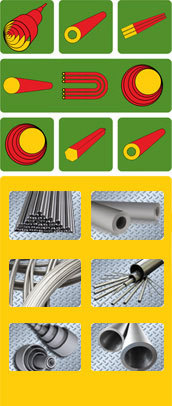
 Process VisualizationThe company's products are primarily used in industrial equipment sectors such as nuclear power, petroleum, petrochemicals, chemical engineering, power generation, automotive, shipbuilding, fertilizer production, pharmaceuticals, papermaking, sugar refining, and machinery manufacturing.
 -
 About UsTsisco Industrial Ltd. was established in 2010. Originating from the Tsingshan ecosystem’s Shanghai platform, the company now operates independently and focuses on global supply-chain integration, distribution, and import/export of steel and alloy materials. We achieved ISO 9001 certification from TÜV Rheinland in 2012, and ISO 9001, ISO 14001 and ISO 45001 certifications from LRQA in 2022. These accreditations underpin continuous improvement and stable performance in quality, environment, and occupational health & safety.
-
Products & Solutions
Centrifugally Cast( Nickel Based Alloy) Pipes
Centrifugally Cast( Nickel Based Alloy) Pipes

Centrifugally Cast ( Nickel Based Alloy) Pipes|Global Sourcing for Engineering & Procurement
1. Positioning & Scope
• Definition: Tubes made by centrifugal casting in heat-resistant Fe–Cr–Ni alloys and corrosion-resistant nickel-based alloys; available as straight tubes, U-tubes, radiant tubes, convection tubes, headers and matched static castings.
• Where they fit:
— Petrochemicals: ethylene cracking furnaces, steam reformers and fired heaters (radiant/convection). Long-term 850–1100 ℃ with internal pressure and high heat flux; concerns are creep, carburization, sulfidation and thermal fatigue.
— Metallurgy & heat treatment: radiant tubes, furnace rolls, bell-furnace parts with severe thermal cycling.
— Energy processes: high-temperature exchangers, shells and manifolds requiring long life and tight soundness.
• Buyer’s shortcut: pick “service scenario”, then map “alloy/grade — governing standard — size window”, and lock heat treatment, surface protection and NDE in the PO.
2. Standards Matrix
• Centrifugal cast heat-resistant tubes (Fe–Cr–Ni): ASTM A608 (ASME SA608), covering HK40, HP40 and HP-Nb-modified families for furnace service.
• Static heat-resistant castings (elbows, tees, manifolds, supports): ASTM A297 (ASME SA297), typically HK/HP types to complement tube systems.
• Nickel-based corrosion-resistant castings (valves, flanges, transitions): ASTM A494 (ASME SA494), e.g., CY40 (600), CW6MC (625), CX2MW (C-22), CW12MW (C-276).
• International equivalents: EN 10295 (heat-resistant cast steels incl. Ni-based coverage), JIS G5122 (heat-resistant steel castings, including centrifugal/static references).
• Note: Industrial furnace tubes are predominantly Fe–Cr–Ni under ASTM A608. If “nickel-based centrifugal cast tubes” are mandatory, specify the ASTM A494 grade as the chemical/performance baseline and contract the centrifugal process and acceptance criteria with the supplier.
3. Scenario → Alloy → Standard → Size (text mapping)
• Radiant coils in ethylene cracking (carburizing, high heat flux, 900–1100 ℃): HP40 / HP-Nb-modified; ASTM A608; OD 100–219 mm, WT 12–25 mm, L 3–12 m; optional internal aluminizing / anti-carburization coating.
• Steam reformer / fired heater convection: HK40 (cost-effective) or HP40 (better thermal-cycle stability); ASTM A608; OD 100–273 mm, WT 8–20 mm.
• Metallurgical radiant tubes / furnace rolls (thermal cycling): high Ni–Cr–W modified heat-resistant alloys or HP-modified; tubes per A608 with static parts per A297; radiant tubes OD 76–219 mm, rolls up to 600–1200 mm OD (vendor capability).
• Corrosion-critical components and transitions (chlorides/mixed acids/sulfur species): A494 CY40/625/C-22/C-276 as static castings; if centrifugally formed, contract A494 chemistry/performance + centrifugal acceptance; typical for CRA flanges/couplings/short spools.
• High-T exchangers, headers/manifolds (long life): HP or HP-Nb-modified tubes per A608; static parts per A297; tubes OD 100–300 mm, headers/manifolds OD 100–400 mm, WT 10–40 mm.
4. Dimensional Capability & Tolerances (typical, negotiable)
• OD/WT: tubes commonly OD 100–300 mm, WT 8–25 mm; larger OD for non-pressurized shells/rolls up to ~1200 mm (per vendor).
• Length: 3–12 m typical; longer by field welding.
• Ends & geometry: PE/BE; straightness, ovality, end squareness and machining allowance defined on drawings.
• Tolerances: centrifugal casting allows wider tolerances than wrought/forged; define acceptance bands based on fit-up and stress analysis.
5. Manufacturing & Key Controls
• Melting & refining: EAF/IF followed by AOD/VOD; ESR or VIM optional for high-cleanliness projects.
• Casting: controlled speed/temperature/soak to achieve uniform wall and soundness; proper feeding for shrinkage compensation.
• Heat treatment: solution anneal 1120–1200 ℃ with rapid cooling to dissolve continuous carbides and suppress sigma; staged or extended solution for HP-modified creep life.
• Surface protection: end/OD machining; internal aluminizing (diffusion Al) or anti-carburization/sulfidation coatings on request.
• Welded assemblies: static cast elbows/tees/header pieces welded to centrifugal tubes; WPS/PQR per project.
6. QA/QC & Documentation
• Chemistry: OES with control of C, S, P and microalloying (Nb/Ti/W).
• Metallography: evaluate carbide network, secondary carbides and sigma; carburization/oxidation witness tests where relevant.
• Mechanical & high-T: room-temperature tensile/hardness; creep-rupture data at specified T/σ (e.g., 100,000 h targets) when required.
• NDE: UT/RT coverage by risk; ET as needed; He-leak for critical seals.
• Pressure/tightness: hydro/air tests per PO for pressure-retaining items.
• Dossier: EN 10204 3.1/3.2 MTC, HT records, NDE reports, coating thickness/adhesion, TPI witnessing as specified.
7. Supply Forms, Packing & Traceability
• Forms: straight tubes, U-tubes, radiant/convection tubes, short spools; matched static castings and weldments.
• Packing: end protection, rust prevention, moisture control, sea-worthy bracing; optional oil film or desiccant.
• Traceability: heat/grade/size/HT batch/PO on each piece; QR traceability on request.
8. RFQ Essentials (copy-ready)
1. Standard & grade: “ASTM A608 HP-Nb modified” for tubes; “ASTM A297 HP class” for static parts; nickel-based parts “ASTM A494 CW6MC/CX2MW/CW12MW” as applicable.
2. Service & life: medium (carburizing/sulfidizing/oxidizing), design T/P, target life.
3. Size & geometry: OD × WT × L, straightness/ovality/end squareness and machining allowance; PE/BE.
4. Heat treatment & protection: solution anneal parameters; internal aluminizing or anti-carburization coating with target thickness and QA method.
5. NDE & tests: UT/RT extent; hydro/air; creep-rupture data or database equivalency.
6. Dossier & witnessing: EN 10204 3.1/3.2, metallography/coating records, TPI hold/witness points.
7. Delivery & logistics: split shipments, lifting/storage constraints.
9. Installation & O&M Risks (mitigation)
• Confusing nickel-based with Fe–Cr–Ni heat-resistant grades → cost or creep shortfalls. Use A608 HK/HP for furnace tubes; A494 nickel alloys for CRA parts.
• No carburization/sulfidation plan for radiant tubes → early failure. Use diffusion Al or anti-carburization coatings.
• Poor HT control → sigma/continuous carbides. Lock solution window and quench; require metallographic acceptance.
• Geometry not specified → fit-up issues. Quantify straightness/ovality/end finish and machining allowances in RFQ.
•”Nominal” sizes beyond vendor window. Confirm capability in writing for large OD shells/rolls.
10. Representative Spec Lines
• Radiant tube:
“Tube, Centrifugal Cast, ASTM A608 HP-Nb Modified, OD 133 mm × WT 18 mm × L 10 m, Solution Annealed, Internal Aluminized 60±10 μm, UT 100% + RT on welds (if any), MTC EN 10204 3.1, Creep data at 950 ℃ on request.”
• Convection tube:
“Tube, Centrifugal Cast, ASTM A608 HK40, OD 168.3 mm × WT 12.5 mm × L 6 m, Solution Annealed, UT 100%, Beveled Ends, MTC 3.1.”
• CRA transition (static casting):
“Coupling, ASTM A494 CW6MC (Alloy 625 cast), per drawing, Solution Annealed, 100% PMI, PT/RT per ITP, MTC 3.1.”
Centrifugally Cast( Nickel Based Alloy) Pipes|Technical Specifications
0) Corrections and Boundaries (read first)
1. Nature of A608: ASTM/ASME A608/A608M covers centrifugally cast iron-chromium(-nickel) heat-resisting alloy tubes (Fe-Cr-Ni “heat-resisting cast steels”), not true nickel-base superalloy tubing.
2. Nickel-alloy castings: ASTM A494/SA-494 applies to Ni/Ni-base corrosion-resistant castings (valves, fittings, specials). ASTM A351/SA-351 are austenitic stainless castings, not nickel-base.
3. “Centrifugal cast nickel-base tubes”: In practice, primary furnace tubes remain Fe-Cr-Ni A608/A297. If a nickel-base centrifugal tube is required, lock it by A494 grade + CTC, after proving cost and manufacturability.
4. Design/FFS context: Furnace coils and reformer tubes are engineered with API 530 (tube thickness), API 560 (fired heaters) and API 579/ASME FFS-1 for fitness-for-service, alongside material standards (A608/A297/A494).
5. EN/JIS/CN equivalents: EN 10295 (heat-resisting steel castings), JIS G5122 (including centrifugal tubes). Many CN projects directly adopt ASTM/ASME with project-specific T&Cs.
6. Capability vs typical sizes: Typical furnace tubes are OD ~100–300 mm, WT ~8–25 mm, L ~3–12 m. OD ~1200–1600 mm appears in large rollers/casings and is capability-limit, not common.
1) Product Definition and Scope
• Definition: Centrifugally cast Fe-Cr-Ni heat-resisting tubes (A608) plus static heat-resisting castings or nickel-alloy castings (A297/A494) for long-term service at ~850–1100 °C under internal pressure, high heat flux and thermal cycling.
• Applications:
• Petrochemical heaters: ethylene pyrolysis coils, steam reformer tubes, fired-heater radiant/convection sections (risks: creep, carburization/sulfidation, thermal fatigue, oxidation/scale spall).
• Metallurgy/heat-treat: radiant tubes, roller pipes, bell-type furnace parts.
• Energy: high-temperature heat-exchanger shells/tubes, headers/manifolds (centrifugal tubes + static cast fittings).
2) Standards and Codes Matrix
• Centrifugally cast heat-resisting tubes: ASTM/ASME A608/A608M (grades HK, HP, HU, HT, HX…).
• Static heat-resisting castings: ASTM A297/SA-297.
• Nickel-alloy castings: ASTM A494/SA-494 (CY40≈Inconel 600; CW6MC≈Inconel 625; CX2MW≈C-22; CW12MW≈C-276).
• EU/JP references: EN 10295, JIS G5122.
• Design/FFS: API 530, API 560, API 579/ASME FFS-1.
• NDE & inspection: ASTM A609 (UT), ASTM E446/E186/E280 (RT comparators), ASTM E165/E1417 (PT), MSS SP-55 (visual), ASNT SNT-TC-1A (personnel).
• Documents: EN 10204 3.1/3.2 with third-party witnessing (TÜV/DNV/LR/SGS).
3) Materials and Grades (by service)
A608/A297 (Fe-Cr-Ni heat-resisting)
• HK40 (~25Cr-20Ni): 850–1000 °C general radiant/convection; cost-effective.
• HP40 / HP-Nb-modified (~25Cr-35Ni + microalloying): 900–1050 °C main radiant tubes; superior creep life and carburization resistance vs HK; vendors supply variants with W/Si/Nb/B.
• HU/HT/HX families: higher Ni/Cr or W-modified for high-T oxidation/thermal cycling.
• High Ni-Cr-W (e.g., engineering references to NiCr28W/“2.4879” types) for high-T rollers/large non-pressure parts.
A494 (Ni-base corrosion-resistant castings)
• CY40 (Inconel 600): Ni-Cr-Fe, oxidation/Cl- environments; bodies/fittings.
• CW6MC (Inconel 625)/CX2MW (C-22)/CW12MW (C-276): severe corrosion locations (acid/Cl⁻/mixed media); commonly fittings, not primary radiant tubes (cost/creep constraints).
Selection logic: Base tube selection on creep life + carburization/sulfidation resistance; add A494 specials or internal aluminide/cermet coatings only at extreme corrosion nodes.
4) Typical Size Capability and Tolerances
• Common furnace tubes: OD ~100–300 mm, WT ~8–25 mm, L ~3–12 m.
• Large rollers/casings: OD up to ~1200–1600 mm (capability-limit; confirm tooling).
• Ends: PE/BE with ASME B16.25 bevel; prefabricated tees/headers/elbows (elbows usually static cast + weld).
• Tolerances/geometry (to be locked in PO): OD, nominal WT, eccentricity/ovality, straightness, squareness, and machining allowances; note centrifugal castings have broader inherent tolerances than rolled/forged tubes and must be quantified to meet fit-up and stress analyses.
5) Manufacturing Process and Controls
1. Melting/refining: IF/EAF → AOD/VOD; optional ESR/VIM for cleanliness; low C/S/P; precise microalloy control (Nb/Ti/W/B/Si).
2. Centrifugal casting: control speed/pour temperature/soak to achieve soundness and uniform WT; use sleeves/controlled cooling on large sections.
3. Heat treatment: solution anneal ~1120–1200 °C + rapid cool to dissolve continuous M₂₃C₆/M₇C₃ networks and avoid σ-phase; modified HP often needs two-stage/extended solution for creep life.
4. Machining & surface: end/OD/ID machining; expand/reduce ends as required; optional internal diffusion aluminizing/NiCrAlY spray for anti-carburization; straightness correction to drawing.
5. Optional: HIP for special parts requiring extra soundness (owner decision).
6) QA/QC and Acceptance (ITP backbone)
• Chemistry: heat & spectro; record microalloy contents; strict C/S/P.
• Metallography: carbide continuity, secondary carbide morphology, σ-phase/deleterious phases; inclusion rating if specified.
• Mechanical/high-T: room-T tensile, hardness; provide creep-rupture points (e.g., 100 000 h targets) or type-test database.
• NDE: UT (A609)/RT (E446/E186/E280)/PT (E165/E1417); weld NDE to project class; visual per MSS SP-55.
• Corrosion/Coating: oxidation weight-gain coupons, carburization exposure; aluminide/coating thickness/adhesion/microstructure checks.
• Pressure/tightness: hydro/pneumatic per design; note some radiant sections are not pressure-rated but must meet leak-tightness; helium tests for critical seals.
• Docs: EN 10204 3.1/3.2, heat-treat curves, NDE reports, creep/material database references, TPI records.
7) Service → Material → Standard: Quick Mapping
• 850–950 °C, general radiant/convection → HK40 (A608/A297).
• 900–1050 °C, main radiant, higher Pi, long life → HP40 / HP-Nb-mod (A608/A297); for high carbon potential/high heat flux consider W/Si-modified HP and/or internal aluminizing.
• High-T oxidation + frequent cycling → HX/HT family or high Ni-Cr-W modifications.
• Severe corrosion nodes/valves/fittings → A494: CY40(600)/CW6MC(625)/CX2MW(C-22)/CW12MW(C-276) (typically static cast).
8) RFQ/PO Checklist (ready to reuse)
1. Standard + grade: A608 (HK40/HP-Nb-mod/…) or A297 (HK/HP/…) / A494 (CY40/CW6MC/CX2MW/…), with EN 10295/JIS G5122 equivalence if needed.
2. Service: media (carburizing/sulfidizing/oxidizing/Cl⁻), metal temperature & design life, design pressure/heat-flux range, start-stop frequency.
3. Size: OD × WT × L; PE/BE, ASME B16.25 bevel; prefab tees/headers/elbows & interfaces.
4. Heat treat: solution-anneal window & quench; modified-HP microalloy package (Nb/Ti/W/Si/B…) and HT regime.
5. QC: chemistry/metallography, UT/RT/PT scope; pressure/leak; optional creep-rupture tests or vendor database.
6. Surface/protection: aluminizing/coatings with thickness/adhesion acceptance.
7. Docs: EN 10204 3.1/3.2, HT curves, NDE, TPI, traceability.
8. Packing/handling: end caps, rust inhibitor, crating/racking, straightness protection, lifting/stacking limits.
9) Construction/Welding and Risk Controls
• Filler compatibility: select NiCr fillers per WPS/PQR compatible with HP/HK/Ni-alloy parts; control heat input to avoid coarsening/sensitization.
• Post-treatment: weld pickling/cleaning; avoid chlorides; localized stress relief only per vendor advice/geometry.
• Fit-up: verify straightness/ovality/misalignment; maintain controlled gaps at elbow-to-tube welds.
• Carburization/coking: apply internal aluminide or alloy coatings at high carbon-potential zones; avoid dead legs/stagnation.
• Thermal shock: follow heat-up/cool-down curves; avoid cold air impingement on hot walls.
• In-service monitoring: spot temperatures, OD bulging (creep), oxidation spall/cracks; apply API 579 assessments as required.
10) Example Spec Lines
• S-1 Main radiant tube (long life)
“Tube, ASTM A608 HP-Nb-mod, OD 139.7 mm × WT 16.0 mm × L 9000 mm, BE with ASME B16.25 bevel; Solution Anneal 1150–1200 °C + rapid quench; NDE UT 100% + PT, RT on welds per ITP; provide creep-rupture data at service T/σ; optional internal aluminizing ≥ 30 µm; Docs EN 10204 3.2, HT curves, NDE.”
• S-2 Convection tube (cost-effective)
“Tube, ASTM A608 HK40, OD 114.3 mm × WT 12.7 mm × L 6000 mm; NDE UT 100%, visual per MSS SP-55; solution annealed; end caps + preservative; MTC 3.1.”
• S-3 Header/tee (static casting)
“Manifold/tee, ASTM A297 HP (or ASTM A494 CW6MC if corrosion dictates), per drawing; NDE: RT level per ITP + PT; hydro/helium per spec; Docs MTC 3.2.”
• S-4 Nickel-alloy corrosion-resistant fitting
“Fitting, ASTM A494 CW12MW (C-276), size/schedule to drawing; PT 100%, UT where applicable; pickled/cleaned; full traceability; MTC 3.1.”
11) Major Global Producers of Centrifugally Cast Heat-Resisting Tubes / Castings
• Europe: Manoir Industries (France, Manaurite series); Paralloy Ltd. (UK); Schmidt + Clemens (S+C) (Germany, Centralloy series).
• Japan: Kubota (KHR/KC series and related).
• North America: MetalTek International (USA, Wisconsin Centrifugal Division); Duraloy Technologies (USA); Spuncast, Inc. (USA).
Note: Supply chains often involve regional machining/assembly and proprietary grade modifications. In RFQs, require type-test/equivalent data and reference lists for target services (ethylene/reformer/fired heaters). Other regions (incl. China/India/Korea) have capable regional foundries; verify current OEM approvals and heater/reformer references.
Tags: