-
 Industries OverviewThe company's products are primarily used in industrial equipment sectors such as nuclear power, petroleum, petrochemicals, chemical engineering, power generation, automotive manufacturing, shipbuilding, fertilizer production, pharmaceuticals, papermaking, sugar refining, and machinery manufacturing.
 -
 Products & SolutionsOur Products: Ferrous metal ore raw materials (nickel ore, ferronickel, ferrochrome, ferromanganese, ferrosilicon, etc.), seamless pipes, welded pipes, medium-thick plates, plate coils, bars, wire rods, wire coils, pipe fittings, flanges, castings, etc.
 -
 CommunityThe company has established an excellent reputation within the industry through its strong credibility, comprehensive services, and ample resources.
 -
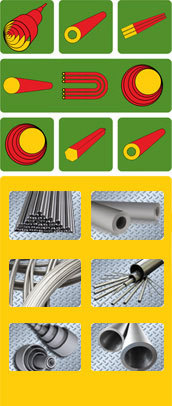
 Process VisualizationThe company's products are primarily used in industrial equipment sectors such as nuclear power, petroleum, petrochemicals, chemical engineering, power generation, automotive, shipbuilding, fertilizer production, pharmaceuticals, papermaking, sugar refining, and machinery manufacturing.
 -
 About UsTsisco Industrial Ltd. was established in 2010. Originating from the Tsingshan ecosystem’s Shanghai platform, the company now operates independently and focuses on global supply-chain integration, distribution, and import/export of steel and alloy materials. We achieved ISO 9001 certification from TÜV Rheinland in 2012, and ISO 9001, ISO 14001 and ISO 45001 certifications from LRQA in 2022. These accreditations underpin continuous improvement and stable performance in quality, environment, and occupational health & safety.
-
Products & Solutions
Shipbuilding Steel
Shipbuilding Steel

Shipbuilding Steel|Global Sourcing for Engineering & Procurement
1. Product positioning and application scope
Shipbuilding steel covers hull plates (normal and high strength), sections (bulb flats, I/H-beams, angles and channels), marine pipes (carbon, low-temperature, stainless, duplex stainless and copper-nickel), and cryogenic specials for LNG systems. Applicable ship types include bulk carriers, tankers, container ships, Ro-Pax, fishing vessels, LNG carriers, offshore support vessels and FPSO topsides. Overall performance targets balance strength, toughness, weldability and corrosion resistance under class rules with fatigue and corrosion-addition design.
2. Standards matrix (from design to materials and inspection)
(1) Design and rules: IACS Common Structural Rules (CSR, now embedded in each society’s rules) and individual class construction rules (ABS, DNV, LR, BV, CCS, NK, KR, RINA). (2) Materials: ASTM A131 and GB 712 for plates and sections, together with IACS UR-W series (e.g., UR W11). (3) Marine piping: ASTM A106 (carbon steel), ASTM A333 (low-temperature carbon steel), ASTM A312 (austenitic stainless), ASTM A789/ASTM A790 (duplex stainless), ASTM B111 (Cu-Ni), and GB/T 5312 (seamless carbon/alloy steel pipes for ships). (4) Plate UT and Z-direction properties: EN 10160 and EN 10164. (5) Coating and corrosion: IMO PSPC for ballast and cargo oil tanks and CRS provisions. (6) Dimensional tolerances and flatness: EN 10029 and ASTM A6.
3. Scene–Material–Standard–Size mapping (quick text guide)
(a) General strength areas and outfitting: Grades A/B/D/E (yield ≈ 235 MPa); impact temperature tightens from A to E.
(b) Primary hull members: Use AH/DH/EH/FH 32/36/40 (yield ≈ 315/355/390 MPa) by service temperature; specify Z25/Z35 for thick plates and triaxial nodes.
(c) Ballast tanks and splash zones: In addition to strength grade, specify IMO PSPC, target DFT and “90/10 rule,” and submit the coating technical file (CTF).
(d) Low-temperature and polar service: State impact temperature and single-value criteria; EH series are typical for cold bulkheads.
(e) Seawater and fire-main piping: Cu-Ni 90/10 or 70/30 per ASTM B111 with matching flanges and NDE.
(f) Clean/corrosion-resistant media lines: Austenitic stainless per ASTM A312 with sanitary or compatibility addenda as needed.
(g) Chloride-rich seawater service: Duplex 2205/2507 per ASTM A789/ASTM A790 with phase balance and pitting tests.
(h) LNG and deep-cryogenic systems: 9%Ni pipes/plates per ASTM A333/A553 or system approval rules; WPS/PQR qualified at low temperature.
4. Size ranges and tolerances
(a) Plates and sections: Thickness ≈ 6–100 mm; max plate width ≤ 4,200 mm; length ≤ 18 m; bulb flats ≈ 60×4 to 430×20 mm; I/H-beams commonly H100 to H900. Use EN 10029 or ASTM A6 for thickness and flatness tolerances.
(b) Marine pipes: OD ≈ 10–600 mm, ends plain or beveled, length 6 m or 12 m; large headers up to ~1,200 mm by project; flanges per ASME B16.5/B16.47.
5. Manufacturing flow and key controls
Steelmaking via BOF/EAF followed by secondary refining; vacuum treatment and Ca-treatment where applicable for cleanliness and element control. Rolling/heat-treatment routes include TMCP (controlled rolling/cooling), normalizing, or quench-and-temper depending on strength class. TMCP provides lower CEV, better HAZ toughness and weight reduction; Q&T is for higher strength or thick plates with strict temper stability and welding heat input control. Specify Z25/Z35 for thick plates and cruciform/tri-axial joints in drawings and POs.
6. Quality inspection and documentation
Chemistry and mechanics per ASTM A131/GB 712 and class rules; impact at target temperature meeting average and single values; plate UT per EN 10160 or ASTM A578; Z-direction properties per EN 10164; coating to IMO PSPC with CTF; EN 10204 3.2 certification with heat/batch and full traceability.
7. Supply forms and packing
Supply as heavy/medium plates, sections, cut-to-shape parts, and complete pipe/fittings/flanges packages. Surface as blasted plus shop-primer or oiled (compatible with follow-on systems). Mark heat/grade/standard/state, dimensions, Z-level, UT class and certificate number; cut parts carry piece IDs and assembly marks.
8. Ordering checklist (copy-ready)
Standards and class acceptance; dimensions and tolerances (t×W×L, straightness, edge quality, bevel type); low-temperature toughness (impact T/energy, DWTT/CTOD as needed); UT and Z-direction classes; piping addenda (standard/grade, OD×WT×L or NPS×Schedule, ends, rating, NDE/hydro); coating system (IMO PSPC, DFT, primer compatibility, colors/coats, CTF).
9. Grade selection guide (brief)
Cost/lead-time: A/B/AH32/AH36 are common. Weight and weldability: TMCP DH/EH preferred. Polar/low-temperature: choose stricter impact grades or FH and state test temperature. Thick plates/nodes: specify Z25/Z35 and mark areas in drawings. Seawater and fire mains: Cu-Ni 90/10 or 70/30 with matched flanges and NDE.
10. Risks and do-not-accept items
Do not confuse AH36 with ASTM A36; never substitute API 5L or EN 10025 for hull steel; do not deploy plates without verified target-temperature toughness or without required Z-properties at tri-axial joints; PSPC non-compliance on salt, profile, DFT and compatibility is rejectable; TMCP materials reworked under high heat input require re-qualification.
11. Representative spec lines (copy-ready)
(a) Ballast-tank plate: “ASTM A131 DH36 (TMCP), t 22 mm × 3,200 mm × 12,000 mm; CVN ≥ 34 J @ −20 °C; EN 10160 S2/E2; EN 10164 Z25; Sa2½ blast + zinc-silicate shop primer (compatibility report attached); EN 10204 3.2 (DNV witness).”
(b) Polar bulkhead: “GB 712 EH36 (TMCP), t 28 mm × 3,000 mm × 12,000 mm; CVN ≥ 41 J @ −40 °C; EN 10160 S2/E3; Z35; 3.2 certificate.”
(c) Seawater main: “ASTM B111 C70600 (90/10), OD 219.1 mm × WT 6.35 mm × L 6 m, ends BE; 100% ET + hydro; mating ASME B16.5 Class 150 Cu-Ni flanges; MTC 3.1/3.2.”
(d) Cryogenic line: “ASTM A333 Gr.8 (9%Ni), OD 168.3 mm × WT 7.11 mm × L 12 m; UT/ET + hydro; welding procedures qualified at low temperature; MTC 3.2 (LR witness).”
12. Representative global producers (examples, A–Z)
Europe: ArcelorMittal, Dillinger, Salzgitter, thyssenkrupp, voestalpine Grobblech, SSAB, NLMK Clabecq. Japan: JFE Steel, Nippon Steel. Korea: POSCO, Hyundai Steel. China: Baowu, Ansteel, Wuyang, HBIS/Shisteel, Shougang, Rizhao. Sections and bulb flats are supplied by these mills and specialized makers with class approvals. Marine pipe packages from Vallourec, Tenaris, Jindal and Kobelco; Cu-Ni tubing supplied by EU/Asia specialists under ASTM B111 with class approvals.
Shipbuilding Steel|Technical Specifications
1. Definition and scope
• Plates (normal/high strength), sections (bulb flats, H-beams, angles/channels), ship pipes (carbon/low-temp steels, stainless/duplex, Cu-Ni), and LNG/cryogenic specials.
• Applicable to bulk carriers, tankers, container ships, RoPax, fishing vessels, LNG carriers, offshore service vessels and FPSO topsides.
• Balanced targets: strength–toughness–weldability–corrosion resistance under class rules, fatigue and corrosion-addition design.
2. Codes and standards matrix
• Structural design: IACS CSR (Common Structural Rules; integrated in class rulebooks).
• Materials (plates/sections): ASTM A131 (A/B/D/E; AH/DH/EH/F32/36/40), GB 712; IACS UR W-series (e.g., UR W11 general requirements for plates/sections).
• Piping: ASTM A106 (carbon), ASTM A333 (low-temp incl. Gr.6/Gr.3/Gr.8), ASTM A312 (austenitic stainless), ASTM A790/A789 (duplex 2205/2507), ASTM B111 (Cu-Ni C70600/C71500), GB/T 5312 (ship seamless steels).
• NDE and supplementary properties: EN 10160 (plate UT), ASTM A578 (UT alt.), EN 10164 (Z15/Z25/Z35).
• Coating/corrosion: IMO PSPC (MSC.215(82) ballast tanks, MSC.288(87) COT), IMO MSC.289(87) (CRS), ISO 12944-9 (CX/Im4).
• Tolerances: EN 10029 (plates), ASTM A6 (general).
3. Material families and grades
• Normal strength: A/B/D/E (≈235 MPa yield; D/E are low-temp impact grades).
• High strength: AH/DH/EH/F32/36/40 (≈315/355/390 MPa yield bands; letter indicates tougher impact temperature from +20 °C down to about −60 °C per class).
• Delivery conditions: TMCP/controlled rolling, Normalizing (N), Quenched & Tempered (Q&T). TMCP gives low CEV and robust HAZ toughness; Q&T suits higher strength/thickness but requires tighter heat-input and tempering control.
• Z-direction: specify EN 10164 Z25/Z35 for thick plates and triaxial joints (marked on drawings and PO).
• Pipes: A106 Gr.B/Gr.C (fuel/steam/general), A333 Gr.6/Gr.3 (LT), A333 Gr.8 (9%Ni cryogenic), A312 304/316L (clean/corrosive), A790 2205/2507 (seawater/Cl-), B111 C70600/C71500 (seawater/firewater).
• LNG containment/cryogenic plates: A553-I (9%Ni for independent/land tanks); membranes: Mark III (304L) / NO96 (Invar® 36%Ni) with licensed procedures.
4. Sizes and capability (typical; confirm mill and project)
• Plates/sections: 6–100 mm thick (heavier by approval), width ≤ 4200 mm, length ≤ 18 m; bulb flats ≈ 60×4 to 430×20 mm; H-beams ≈ H100–H900.
• Pipes: OD 10–600 mm typical, up to ~1200 mm for mains; PE/BE ends; 6/12 m lengths; flanges to ASME B16.5/B16.47 (Class 150/300/600 common).
• Tolerances: EN 10029 or ASTM A6; plate edges with bevels; straightness per yard fit-up.
5. Manufacture and process control (plates/sections)
• Steelmaking: BOF/EAF → LF/VD/VOD; control C/S/P/N and inclusions (Ca treatment where applicable).
• Casting/rolling: continuous slab; TMCP for fine grains; Q&T heavy plates verified by hardness/impact and, as specified, metallography.
• NDE: plate UT per EN 10160 / ASTM A578; edge/splice zones enhanced.
• Z-direction tests: EN 10164 sampling and reduction area; Z25/Z35 for designated joints.
• Pre-coating: Sa2½ blast, 30–75 μm profile, soluble salt ≤ 50 mg/m²; PSPC epoxy with 90/10 rule (ballast NDFT ≈ 320 μm typical).
6. Service–material–standard quick mapping (contract-ready)
• Decks/bulkheads/longitudinals (temperate): AH36/DH36 (ASTM A131 or GB 712) with TMCP; Z25/Z35 for thick/triaxial joints; plate UT per EN 10160.
• Cold/Arctic routes (−20/−40/−60 °C): DH/EH/FH grades at target temperature; HAZ heat-input control per mill/class; verify CVN at Tmin.
• Ballast tanks: hull plates + PSPC (MSC.215(82)); Sa2½, salts ≤ 50 mg/m²; epoxy NDFT ≈ 320 μm; shop primer (zinc silicate) must be compatible.
• Cargo oil tanks: hull plates + PSPC-COT (MSC.288(87)); CRS (MSC.289(87)) as enhancement/alternative.
• Seawater/firewater/ballast piping: B111 C70600 (90/10) baseline; C71500 (70/30) for high velocity/erosion points; A790 2205/2507 where higher pitting/crevice-resistance or SCC resistance is required.
• Fuel/lube/steam: A106 Gr.B/Gr.C; select Schedule by P/T; gauge/pressure test and gauging post-weld.
• Low-temperature piping (−46 to −101 °C): A333 Gr.6/Gr.3; verify impact and welding.
• LNG (≈ −162 °C): A333 Gr.8 (9%Ni) for piping; A553-I for independent tanks; membrane systems to licensed specs (304L/Invar).
• Common pitfalls to forbid: AH36 ≠ A36; API 5L not for hull; weathering steel not for splash/submerged zones.
7. Welding and outfitting (yard execution)
• WPS/PQR per class Part 2 and ISO 15614-1; class-approved consumables; hardness/impact/metalography and CTOD where specified.
• Low-hydrogen regime; preheat/interpass set by CEV/thickness/restraint; manage heat-input to avoid TMCP degradation/Q&T temper embrittlement.
• NDE: plate UT (edge/splice enhanced); weld RT/UT/PT/MT by class; tightness tests for fluid boundaries.
• Geometry/shrinkage: control misalignment/gaps; grind transitions on fatigue-sensitive details.
• CTF (PSPC coating technical file): mandatory records of climate, salts, profile, DFT, holidays, adhesion, compatibility and repairs.
8. QA/ITP and documentation
• Chemistry/mechanics per A131/GB 712 and class rules; CVN at Tmin (avg/min as specified); drop-weight where required.
• NDE per EN 10160 / ASTM A578; weld NDE by class; Z-direction tests and ratios agreed.
• PSPC compliance: Sa2½, salts/profile, NDFT “90/10 rule”, compatibility report, CTF.
• Certificates: EN 10204 3.2 with class witnessing; full heat/batch traceability.
9. Delivery and packing
• Forms: plates/sections, cut parts, pipe/fittings/flanges packages.
• Surface: blasted + shop primer or oiled; edge protection/lashing.
• Marking: grade/standard/condition, size, heat/batch ID, Z-class, UT class, cert No.; part IDs and orientation on cut parts.
10. RFQ/PO checklist (ready-to-use)
11. Standard & class: e.g., “ASTM A131 EH36 (TMCP), DNV approved” or “GB 712 EH36 (TMCP), CCS approved”.
12. Size & tolerances: t × width × length; flatness/edge quality; bevel spec.
13. Toughness: CVN at target temperature; drop-weight/CTOD where required.
14. UT & Z-direction: EN 10160 level (edge/splice enhanced); EN 10164 Z25/Z35 + locations.
15. Piping: standard + grade (A106/A333/A312/A790/B111 etc.), OD × WT × L or NPS × Sch, end type, pressure class, NDE/hydro ratio.
16. Coating: PSPC system and NDFT; shop-primer compatibility; colours/coats; CTF deliverables.
17. Witness & docs: EN 10204 3.2; MTC, NDE, impact/low-temp, PSPC CTF, traceability list.
18. Risks and “no-go” items
• Confusing AH36 with A36; replacing hull steels with API 5L or general structural grades; missing CVN at service Tmin; lacking Z25/Z35 for triaxial joints; PSPC non-compliance; excessive re-weld/heat-input on TMCP without re-qualification.
12. Global industry clusters and indicative mills (alphabetical; verify approval scope for RFQs)
• Europe: ArcelorMittal (incl. Industeel), Dillinger, Salzgitter, thyssenkrupp, voestalpine Grobblech, SSAB, NLMK Clabecq.
• Japan: JFE Steel, Nippon Steel.
• Korea: POSCO, Hyundai Steel.
• China: Baowu (Baosteel), Ansteel, Wuyang Steel, HBIS/Shisteel, Shougang, Rizhao Steel.
• Piping & packages: Vallourec, Tenaris, Jindal, Kobelco and regional Cu-Ni/stainless/duplex specialists with class approvals.
13. Example spec lines
• Ballast tank plate (PSPC):
“ASTM A131 DH36 (TMCP), 22 mm × 3200 mm × 12000 mm; CVN ≥ 34 J @ −20 °C; EN 10160 S2/E2; EN 10164 Z25; Sa2½ + zinc-silicate shop primer (compatibility report attached); EN 10204 3.2 (DNV witnessed).”
• Cold-region bulkhead:
“GB 712 EH36 (TMCP), 28 mm × 3000 mm × 12000 mm; CVN ≥ 41 J @ −40 °C; EN 10160 S2/E3; Z35; 3.2 certificate.”
• Seawater main:
“ASTM B111 C70600 (90/10), OD 219.1 mm × WT 6.35 mm × L 6 m, BE; 100% ET + hydro; ASME B16.5 Class 150 Cu-Ni flanges; MTC 3.1/3.2.”
• LNG low-temp pipe:
“ASTM A333 Gr.8 (9%Ni), OD 168.3 mm × WT 7.11 mm × L 12 m; UT/ET + hydro; welding WPS/PQR at cryogenic temperature; MTC 3.2 (LR witnessed).”
Tags: