-
 Industries OverviewThe company's products are primarily used in industrial equipment sectors such as nuclear power, petroleum, petrochemicals, chemical engineering, power generation, automotive manufacturing, shipbuilding, fertilizer production, pharmaceuticals, papermaking, sugar refining, and machinery manufacturing.
 -
 Products & SolutionsOur Products: Ferrous metal ore raw materials (nickel ore, ferronickel, ferrochrome, ferromanganese, ferrosilicon, etc.), seamless pipes, welded pipes, medium-thick plates, plate coils, bars, wire rods, wire coils, pipe fittings, flanges, castings, etc.
 -
 CommunityThe company has established an excellent reputation within the industry through its strong credibility, comprehensive services, and ample resources.
 -
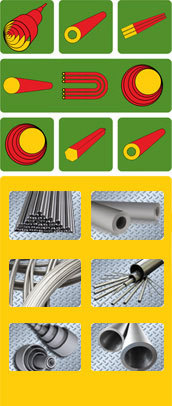
 Process VisualizationThe company's products are primarily used in industrial equipment sectors such as nuclear power, petroleum, petrochemicals, chemical engineering, power generation, automotive, shipbuilding, fertilizer production, pharmaceuticals, papermaking, sugar refining, and machinery manufacturing.
 -
 About UsTsisco Industrial Ltd. was established in 2010. Originating from the Tsingshan ecosystem’s Shanghai platform, the company now operates independently and focuses on global supply-chain integration, distribution, and import/export of steel and alloy materials. We achieved ISO 9001 certification from TÜV Rheinland in 2012, and ISO 9001, ISO 14001 and ISO 45001 certifications from LRQA in 2022. These accreditations underpin continuous improvement and stable performance in quality, environment, and occupational health & safety.
-
Products & Solutions
Processing Piping
Processing Piping

Processing Piping( Chemical Plant Piping)|Global Sourcing for Engineering & Procurement
1) Product Positioning & Scope
Metallic piping systems for process and utilities, covering pipe, flanges, butt-weld/socket-weld/threaded fittings and connection items. Materials include carbon and low-alloy steel, austenitic and duplex stainless steels, super-austenitic grades, nickel and Ni-base alloys, titanium and its alloys, plus metallurgically clad and thermoplastic-lined (PTFE/PFA) systems. Typical services include acids/alkalis/salts, chlor-alkali and oxidation, HNO₃/H₂SO₄/H₃PO₄, urea/ammonia, alkylation and hydrotreatment, cracking and regeneration, steam and thermal fluids, circulating cooling water and seawater, inert gases, low-temperature/cryogenic, and off-gas/wastewater treatment.
2) Standards Matrix (Top-Down)
• Design & in-service: ASME B31.3 as the primary code; ASME B31.4/B31.8 for cross-country lines; API 570, API RP 571 and API RP 578 for in-service integrity and PMI. EN 13480 and GB/T 20801 may be specified in EU/PRC projects.
• Dimensions & pressure ratings: ASME B36.10M (CS/low-alloy) and ASME B36.19M (stainless). Flanges, gaskets and fittings per ASME B16.5, B16.47, B16.9, B16.11, B16.20/16.21. Metric PN options via EN 1092-1 and ISO 7005; HG/T 20592–20635 is common in PRC chemical service.
• Products & materials (examples):
CS/low-alloy pipe to ASTM A106/A53/A333/A335 (general A530). Austenitic stainless to ASTM A312 (SMLS/ERW/EFW) and heavy-wall EFW to ASTM A358 (Class defines weld NDE), general A999. Duplex/super-duplex to ASTM A790 (SMLS/Welded) and A928 (EFW), fittings to ASTM A815, harmful-phase test per ASTM A923. Ni-base pipe to ASTM B622 with fittings/flanges to ASTM B366/B564 and general B829. Titanium pipe to ASTM B338 and flanges/forgings to ASTM B381. PTFE/PFA lining to ASTM F1545. Corrosion compliance may cite ISO 21457, NACE MR0103/ISO 17945 and NACE MR0175/ISO 15156 as applicable.
3) Scenario–Material–Standard–Size Mapping
• Cooling-water/seawater: Duplex 2205 or super-duplex 2507; pipe per ASTM A790 (SMLS/Welded), fittings per ASTM A815, verify ASTM A923; typical NPS 1–24, Sch 10S–40S, flanges per ASME B16.5.
• Sulfuric/mixed acids (non-strongly reducing): Super-austenitics such as 6Mo (UNS S31254) or 904L (N08904); pipe per ASTM A312 (SMLS/Welded) with A999; typical NPS 1–12, Sch 10S to 40S.
• HCl/acid recovery: PTFE/PFA-lined CS or alloy steel per ASTM F1545; flanged ends; DN 25–DN 300 typical; thickness by ASME B31.3 and vacuum rating confirmation.
• Urea/carbamate lines: 316L UG and 25-22-2 (UNS S31050), windows constrained by process licensor; pipe per ASTM A312 or project specification; typical NPS 2–12.
• High-temperature steam/regeneration air: Cr-Mo steels P11/P22/P91/P92 per ASTM A335 with ASME B31.3 thickness, strict PWHT; NPS 2–24, Sch 40–XXS typical.
• Low-temperature/cryogenic: LTCS per ASTM A333 (impact to project temp), flanges A350 LF2; thickness by B31.3.
• Severe corrosion/chloride-rich or mixed acids: Ni-base alloys C-276/C-22/625/825/Alloy 20; pipe per ASTM B622 etc., fittings/flanges per B366/B564; NPS 1–12, Sch 10S–40S.
• Instrumentation/sample lines: 316L or 2205 thin-wall tube to ASTM A269 or A213; OD 6–25.4 mm, WT 0.9–2.0 mm; straight lengths and coils; tolerances per ISO 1127 or A269.
4) Size Range & Tolerances
Typical NPS 1/2–24 (extendable to NPS 60 via ASME B16.47 flanges). Wall schedules Sch 5S, 10S, 40, 80, 160, XXS, or calculated by ASME B31.3 including corrosion allowance and bending adders. General dimensional and testing tolerances per ASTM A999 (stainless), ASTM A530 (CS/low-alloy) and ASTM B829 (Ni-base). Ends may be BE/BW/SW/THD; lined systems are predominantly flanged.
5) Manufacturing & Critical Controls
SMLS (hot-worked plus cold-drawn/rolled) and welded routes (HFW/SAW/EFW/laser). Heavy-wall austenitics often use ASTM A358 EFW with Class-driven 100% RT/UT. Heat treatment: austenitic solution anneal ≥1040 °C with rapid quench; duplex solution-anneal with phase balance verification; CSEF steels (P91/P92) normalize and temper with mandatory PWHT controls. Cleanliness: pickle & passivate; test water Cl⁻ ≤ 50 mg/L with dry preservation. PTFE/PFA linings per ASTM F1545 with vacuum rating/thermal cycling allowances; clads/overlays require dilution control and face chemistry/hardness verification.
6) Quality, Inspection & Documentation
Weld NDE by RT/UT/TOFD; ET for thin austenitic; A358 heavy-wall with full RT by Class. Corrosion/phase tests per ASTM A262 (IGC of austenitics), ASTM A923 (duplex deleterious phases) and ASTM G48 (pitting/crevice). 100% PMI on critical alloys/welds. LTCS to A333 impact at project temperature. Deliverables: EN 10204 3.1/3.2 CMTR, heat-treatment charts, original NDE records, pressure/leak tests, pickling/passivation and cleanliness/preservation records, and TPI dossiers.
7) Supply Forms & Packing
End caps/blinds; dry-preserved for austenitic/duplex; halogenated rust preventives forbidden. Markings include standard, grade, size, heat/lot, manufacturing route (SMLS/EFW/SAW), NDE class and compliance. Packing by wooden cases/steel bands with moisture barriers/desiccants; lined components supplied with flange protectors and anti-shear port guards.
8) RFQ/PO Checklist
Design code; product standard and grade; dimensions and ends (NPS×Sch or OD×WT×L, bend radius); tolerances and route (A999/A530/B829; SMLS/HFW/SAW/EFW; solution/PWHT); NDE and hydro/pneumatic test ratios and acceptance levels; corrosion/phase tests (A262/A923/G48, HIC/SSC if MR0103/MR0175); surface and cleanliness (pickling/passivation, ID cleanliness, test-water chloride limit, drying/preservation); documents/TPI (MTC 3.1/3.2, PMI, HT/NDE/pressure/coating records); accessories (B16.5/B16.47 flanges, B16.20/16.21 gaskets, A193/A194 bolting); construction constraints (ASME IX WPS/PQR, duplex heat-input/interpass, PWHT, site pickling/flushing).
9) Selection Guide (Narrative)
Use A106/A53 for utilities/inert gases; 2205/2507 (A923 verified) for seawater/high-chloride; 304L/316L for nitric-acid service per temperature and oxidizing strength; PTFE/PFA-lined CS for HCl and strong oxidizers; 904L/6Mo or Alloy 20 for sulfuric acids; C-276/C-22/625/825 for severe/mixed acids; P11/P22/P91/P92 for high-temperature steam; A333 for low temperature; 316L UG and 25-22-2 for urea/carbamate as per licensor.
10) Risks & Mitigations
Mix-up control by 100% PMI at critical points; no chlorinated cleaners/halogenated oils and formalized chloride limit/drying for hydrotests; duplex/6Mo welds with controlled heat-input/interpass and A923/ferrite checks; P91/P92 heat-history and hardness discipline with witnessed PWHT; lined systems—field joints/vacuum/handling shear risks; gasket/bolting media compatibility and hydrogen-embrittlement vigilance; complete neutralization/drying after pickling; special media such as Cl₂/HF/strong oxidants require second-level reviews.
11) Representative Spec Lines (Copy-Ready)
• Seawater/high-chloride header: “Pipe, ASTM A790 S32205, NPS 10 Sch40S, SMLS, solution annealed & water-quenched, Ends BE; ASTM A923 (A/B/C) pass, 100% PMI; Hydro per A999; CMTR EN 10204 3.1; Flanges ASME B16.5 Class 300 A182 F51 RF; Gaskets ASME B16.20 spiral-wound (SS/Graphite).”
• HCl recovery (lined): “Pipe, ASTM F1545 PTFE-lined CS, DN 150, flanged; liner thickness & vacuum rating per design; holiday test & vacuum hold test passed; lined elbows/tees and PTFE gaskets included; Docs: MTC 3.1 + lining QA dossier.”
• High-temperature steam: “Pipe, ASTM A335 P22, NPS 8 Sch80, SMLS; Q&T completed; welds PWHT; NDE RT 10% + UT 100%; CMTR EN 10204 3.1; Flanges A182 F22, ASME B16.5 Class 600 RF.”
• Severe mixed-acid: “Pipe, ASTM B622 N10276 (C-276), NPS 6 Sch40S, SMLS; pickled & passivated; 100% PMI; Hydro per ASTM B829; Flanges ASTM B564 N10276, ASME B16.5 Class 300 RTJ; Gasket: serrated metallic composite.”
12) Representative Global Manufacturers (Examples, Alphabetical)
Stainless & Ni-alloy tubing/piping: Alleima (ex-Sandvik), Tubacex/Tubos Reunidos, BUTTING, Salzgitter Mannesmann, Jiuli, Tsingshan (welded), Fine Tubes/AMETEK, RathGibson. Flanges/forgings: ULMA, Galperti/Metalfar, Ishikawa-jima, JSW/BSL; BW fittings: IBF, Benkan, M.E.G.A. and qualified PRC makers. PTFE-lined systems: Crane Resistoflex, CRP, Richter/Pfaudler (including valves/expansion joints). EPC bids should specify TPI, 3.2 certification and 100% PMI capability for critical alloys.
Processing Piping( Chemical Plant Piping) |Technical Specifications
1) Product Definition & Scope
• Definition. Metallic piping systems for process and utilities in chemical plants: pipe, flanges, butt-weld/socket-weld/threaded fittings, supports/hangers and connection pieces at valve stations. Materials include carbon and low-alloy steel, austenitic and ferritic-austenitic duplex stainless, super-austenitic (6Mo, etc.), nickel and Ni-base alloys, titanium and its alloys, and metallurgically clad / thermoplastic-lined (PTFE/PFA, etc.) products.
• Typical units covered. Acid/alkali/salt services; chlor-alkali and bleaching/oxidation sections; HNO₃/H₂SO₄/H₃PO₄; urea/ammonia; alkylation & hydrotreatment; cracking & regeneration; steam & thermal fluids; circulating cooling water/seawater; inert gases; low-temperature/cryogenic; and off-gas/wastewater treatment.
2) Standards Matrix (top-down)
Design & in-service
• ASME B31.3 (process piping) — primary code.
• Long-distance & station piping: ASME B31.4 / B31.8. In-service integrity: API 570 (piping inspection), API RP 571 (damage mechanisms), API RP 578 (PMI).
Dimensions & pressure ratings
• ASME B36.10M (CS/low-alloy pipe sizes), ASME B36.19M (stainless pipe sizes).
• ASME B16.5 (NPS 1/2–24 flanges, Class 150–2500), ASME B16.47 (NPS 26–60), ASME B16.9 (BW fittings), ASME B16.11 (SW/threaded), MSS SP-97 (reinforced branch outlets), ASME B16.20 / B16.21 (gaskets).
• Metric/PN systems: EN 1092-1 (flanges), ISO 7005; often HG/T 20592–20635 is used in PRC chemical industry for flanges/gaskets/bolting.
Materials & product standards (examples)
• Seamless / alloy steel: ASTM A106 / A53 / A333 / A335 (general A530).
• Austenitic stainless: ASTM A312 (SMLS/ERW/EFW), thick-wall A358 EFW (Class defines weld NDE extent); general A999.
• Duplex / super-duplex: ASTM A790 (SMLS/Welded), A928 (EFW); fittings A815; harmful-phase test A923.
• Nickel & Ni-base: Pipe ASTM B622 (Ni-Cr-Mo alloys), Pipe ASTM B161 (Nickel 200/201), Fittings ASTM B366, Flanges ASTM B564, general ASTM B829.
• Titanium: ASTM B338 (pipe/tube), ASTM B381 (flanges/forgings).
• PTFE/PFA lining: ASTM F1545 (lined steel pipe & fittings); ISO 15494 (thermoplastics piping—general) as a supplement.
Materials selection / corrosion compliance
• NACE MR0103 / ISO 17945 (refining/chemical wet H₂S); NACE MR0175 / ISO 15156 (upstream sour). Supporting tests/refs: ASTM G48 (pitting/crevice), ASTM A262 (austenitic IGC), ASTM A923 (duplex), ISO 21457 (materials selection in oil & gas, as reference).
3) Materials & Grades (mainstream in projects; typical uses)
• Carbon steel: ASTM A106 Gr.B/C, A53 (inside-plot services); API 5L PSL2 for off-plot transmission lines.
• Cr-Mo low-alloy steels: ASTM A335 P11/P22/P9/P91/P92 (high-temperature steam, regen air, to-atmosphere lines; thickness by B31.3 and controlled welding + PWHT). For hot hydrogen, check API 941.
• Austenitic stainless: 304/304L, 316/316L, 321, 347/347H, 904L (specific windows for sulfuric/mixed acids).
• Super-austenitic: 254SMO (UNS S31254) / AL-6XN (N08367) / 904L (N08904) / 28Cr-3Mo (N08028) (high-Cl⁻ oxidizing systems).
• Duplex / super-duplex: 2205 (S32205/S31803), 2507 (S32750), Zeron 100 (S32760) (seawater/high-Cl⁻, amine tail gas, etc.).
• Nickel & Ni-base: Nickel 200/201 (hot concentrated caustic), Alloy 20 (N08020) (sulfuric service), Alloy 625 (N06625) / 825 (N08825) (general corrosion/high-T), C-276 (N10276) / C-22 (N06022) (strong acids/mixed acids/Cl⁻), Monel 400 (N04400) (HF/dry HCl—final selection per process).
• Titanium: Gr.2 / Gr.7 / Gr.12 (seawater/brine/oxidizing chlorides—check crevice corrosion and temperature limits).
• Clad / lined. PTFE/PFA-lined steel (F1545); explosion-clad / roll-bond clad SS/Ni-base to CS (project-specific).
• Specialty units. Urea/ammonium carbamate often use 316L UG / 25-22-2 (UNS S31050) per process licensor.
4) Sizes, Ratings & Tolerances (text form)
• Size range. NPS 1/2–24 common; up to 60″ via B16.47.
• Wall series. Sch 5S/10S/40/80/160/XXS, or B31.3 calculated thickness with corrosion allowance and bend allowances.
• Ends. PE/BE, BW, SW, NPT/ISO 7-1; lined pipe is typically flanged-to-flanged.
• General tolerances & requirements. Per ASTM A999 / A530 / B829 (OD/ovality/straightness/length, flattening/flaring), weld NDE, per-piece hydro/pneumatic (define conditions for electrical alternatives).
5) Manufacturing & Heat Treatment (with key points)
• Pipe routes. Seamless (hot-roll/hot-extrude + cold draw/cold roll); welded (HFW/SAW/EFW/laser). Thick-wall austenitic commonly A358 EFW—Class defines 100% RT/UT extent.
• Heat treatment. Austenitic solution anneal ≥1040 °C and rapid quench; duplex solution anneal with verified phase balance; CSEF (P91/P92) normalize + temper and PWHT after welding; Ni-base and Ti anneal to their material specs.
• Surface & cleanliness. Austenitic/duplex pickling + passivation (ASTM A380/A967). No chlorinated solvents. Document test-water Cl⁻ limit (often ≤50 mg/L, project-specific) and complete drying/preservation.
• PTFE/PFA lining. Execute to ASTM F1545; verify vacuum rating, reinforcement of lining cut-back/terminations, flange shields, and provisions for thermal cycling/expansion.
• Clad / weld overlay. Pipe from clad plate or internal overlays (e.g., 625/316L); acceptance focuses on dilution, clad chemistry, and hardness.
6) Service → Material → Standard: Quick Engineering Mapping
Use as a starting point; finalize by verifying temperature/concentration/chlorides, redox, stress level, and design life, per Owner criteria.
1. General utilities (water/inert gas/low-pressure steam)
→ A106 Gr.B / A53; flanges A105; per B31.3; external coating per site practice.
2. High-temperature steam / to-atmosphere / regen air (≤540–600 °C)
→ A335 P11/P22/P91; welding + PWHT; hot hydrogen per API 941; flanges A182 F11/F22/F91.
3. Seawater/brine/high Cl⁻ (≥60 °C or with stress/crevices)
→ 2205/2507/Zeron100; pipe A790/A928, fittings A815; A923 compliant; flanges A182 F51/F53; run ASTM G48 CPT/weight-loss if required.
4. Hydrochloric / reducing mixed acids (with Cl⁻)
→ C-276/C-22 (B622/B366/B564) or ASTM F1545 PTFE-lined CS; do not use 304/316.
5. Sulfuric acid (H₂SO₄)
→ Alloy 20 (N08020) / 904L / CS in specific windows; if Cl⁻/oxidants present, move to 6Mo/Ni-base; verify against T-C maps.
6. Nitric / strong oxidizers
→ 304L/347/310L (low/No-Mo austenitics); check IGC (A262).
7. Caustic (NaOH) — high T & concentration
→ Nickel 200/201; where oxidizers/mixed media coexist, reassess Alloy 600/625.
8. Wet H₂S / amine tail gas / refinery sour water
→ Materials and hardness under NACE MR0103 / ISO 17945; upstream sour per MR0175 / ISO 15156.
9. Urea / ammonium carbamate
→ 316L UG / 25-22-2 (S31050) as common combinations; follow licensor package.
10. Chlorine / hypochlorite systems
→ Distinguish dry vs wet chlorine; follow industry guidelines (e.g., Chlorine Institute). Engineering practice often uses Monel 400, C-276, or PTFE-lined steel. Do not use standard 300-series SS in moist chlorine unless proven by rigorous drying and validation.
7) Quality Assurance & Inspection (ITP backbone)
• General requirements. A999/A530/B829; dimensions/visual/hardness/flattening/flaring; per-piece hydro/pneumatic or agreed electrical test.
• NDE. Weld RT/UT/TOFD; thin-wall austenitic may use ET; A358 thick-wall: full RT per Class.
• Corrosion & phase control. Austenitic A262; duplex A923; G48 (pitting/crevice) as required; Ni-base—project-specific simulated media if needed.
• PMI. 100% PMI for critical alloys and welds (API RP 578).
• Low temperature. A333 impact at specified temperature; where applicable, Drop-Weight (Pellini).
• Documentation. EN 10204 3.1/3.2 MTC, heat-treat charts, original NDE, pressure/leak tests, pickling/passivation records, cleanliness & preservation records, TPI plan (BV/LR/TÜV/SGS).
8) Delivery & Packaging
• Ends & preservation. Plastic end caps/blinds; austenitic/duplex delivered dry-preserved; no halogen-bearing rust inhibitors.
• Marking. Standard/grade/size/heat (or melt) number/manufacturing route (SMLS/EFW/SAW)/NDE class/compliance statements.
• Packing. Crates/steel bands/moisture barrier & desiccant; lined spools with flange protectors and end-port shear protection.
9) Ordering Essentials (RFQ / technical agreement—paste-ready)
1. Design code: ASME B31.3 (add B31.4/B31.8 if off-plot transmission is included).
2. Product standards + grades: e.g., “ASTM A312 TP316L SMLS / ASTM A335 P22 / ASTM A790 S32205 / ASTM B622 N10276 / ASTM F1545 PTFE-lined CS”.
3. Dimensions & ends: NPS × Schedule or OD × WT × L, bend radius, end form (BE/BW/SW/THD / RF/RTJ).
4. Tolerances & manufacture: A999/A530/B829; pipe route (SMLS/HFW/SAW/EFW); heat treatment (solution / PWHT).
5. NDE & pressure test: RT/UT/TOFD extent & acceptance; per-piece hydro/pneumatic.
6. Corrosion & phase tests: A262 (austenitic), A923 (duplex), G48 (as needed), HIC/SSC if MR0103/MR0175 is invoked.
7. Surface & cleanliness: pickling + passivation requirements, internal cleanliness, test-water Cl⁻ limit, drying/preservation.
8. Files & witnessing: MTC 3.1/3.2, PMI, heat-treat/NDE/pressure/coating records, TPI points.
9. Ancillaries: B16.5/B16.47 flanges (A105/A350 LF2/A182 Fxx), gaskets B16.20/16.21, bolting A193/A194.
10. Construction constraints: WPS/PQR (ASME IX), duplex heat-input & interpass limits, PWHT requirements, on-site pickling & flushing plan.
10) Construction Quality & Risk Controls
• Material mix-ups. 100% PMI at critical areas; segregate Ni-base/duplex/6Mo/Ti from CS.
• Chloride contamination of stainless. No chlorinated cleaners or halogenated rust oils; document Cl⁻ limit for hydrotest water and drying procedure.
• Duplex/6Mo welding. Control heat input and interpass; post-weld A923 or ferrite content sampling per project.
• CSEF steels. P91/P92 with strict thermal-history and hardness control; PWHT fully recorded and witnessed.
• Lined systems/PTFE. Protect terminations, verify vacuum rating, avoid shear during lifting; qualify for thermal cycling/vacuum per procedure.
• Gaskets/bolting. Ensure RTJ/graphite/metal gaskets compatibility; select A193/A194 appropriately and mitigate hydrogen embrittlement.
• Cleaning & passivation. After pickling/passivation, thoroughly neutralize and dry; avoid free-iron contamination.
• Chlorine/HF/strong oxidizers. Follow sector guidelines (e.g., Chlorine Institute); special media require second-stage engineering review.
11) Example Spec Lines (ready to paste into RFQ)
• Seawater / high-chloride circulating-water header
“Pipe, ASTM A790 S32205, NPS 10″ Sch 40S, SMLS, solution-annealed & water-quenched, ends BE, ASTM A923 (A/B/C) pass, 100% PMI, hydro per A999, MTC EN 10204 3.1; Flanges ASME B16.5 Class 300 A182 F51 RF; Gaskets per ASME B16.20, spiral-wound SS/graphite.”
• HCl recovery line (lined)
“ASTM F1545 PTFE-lined CS pipe & fittings, NPS 4″ Sch 40, 6 m spools, vacuum rating per spec, lined elbows/tees/flanges matched, holiday & spark tests included, MTC 3.1, third-party inspection per ITP.”
• Nitric acid (strong oxidizer)
“Pipe, ASTM A312 TP304L, NPS 6″ Sch 10S, EFW Class 1, solution-annealed, ASTM A262 Practice E pass, pickle & passivate per A380/A967, PMI, hydro per A999.”
• High-temperature steam main
“Pipe, ASTM A335 P22, NPS 12″ Sch 80, SMLS, N+T, ends BE; PWHT per WPS/PQR; welds 100% RT/UT; hydro per ASME B31.3; MTC 3.1. Flanges A182 F22; gaskets per B16.20.”
• Concentrated caustic—evaporator section
“Pipe, ASTM B161 N02201 (Nickel 201), NPS 3″ Sch 40, SMLS; general requirements ASTM B829; 100% PMI; hydro per spec; MTC 3.1.”
• Amine tail gas (wet H₂S)
“Pipe, ASTM A312 TP316L, NPS 8″ Sch 40S, SMLS; hardness control & NACE MR0103 compliance; HIC/SSC not required unless specified; 100% PMI; A262 if requested; graphite gasket; bolting A193 B7 / A194 2H.”
12) Representative Global Suppliers (project execution requires AML/QA & witnessing verification)
• Seamless CS/low-alloy (pipe): Tenaris, Vallourec, TMK, Nippon Steel / JFE (JP), TPCO, Baosteel/Baowu, Hengyang / Changbao.
• Stainless/Ni-base (pipe): Alleima (ex-Sandvik), Tubacex / Tubos Reunidos, BUTTING (stainless/clad/lined), Salzgitter Mannesmann (stainless/precision), Jiuli, Tsingshan (stainless welded), Fine Tubes / AMETEK, RathGibson.
• Flanges/forgings: (A182/A105 family) ULMA (ES), Galperti / Metalfar (IT), Ishikawajima (JP), JSW / BSL (IN), plus qualified PRC makers (check PED / ISO 9001 / IATF).
• BW fittings / elbows/tees: IBF (IT), Benkan (JP), M.E.G.A. (IT), and numerous ASME B16.9 manufacturers in China (project audits required).
• PTFE-lined systems: Crane Resistoflex, CRP (UK), Richter / Pfaudler (DE) (incl. fittings/valves/expansion joints), and qualified PRC suppliers to ASTM F1545 (ensure vacuum & holiday testing).
Note. For chemical EPCs, specify in the technical bid: third-party witnessing (BV/LR/TÜV/SGS), EN 10204 3.2 capability, and 100% PMI for critical alloys.
Tags: