-
 Industries OverviewThe company's products are primarily used in industrial equipment sectors such as nuclear power, petroleum, petrochemicals, chemical engineering, power generation, automotive manufacturing, shipbuilding, fertilizer production, pharmaceuticals, papermaking, sugar refining, and machinery manufacturing.
 -
 Products & SolutionsOur Products: Ferrous metal ore raw materials (nickel ore, ferronickel, ferrochrome, ferromanganese, ferrosilicon, etc.), seamless pipes, welded pipes, medium-thick plates, plate coils, bars, wire rods, wire coils, pipe fittings, flanges, castings, etc.
 -
 CommunityThe company has established an excellent reputation within the industry through its strong credibility, comprehensive services, and ample resources.
 -
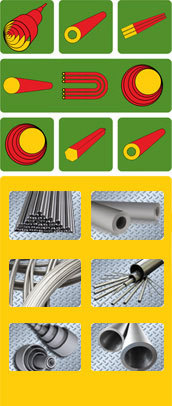
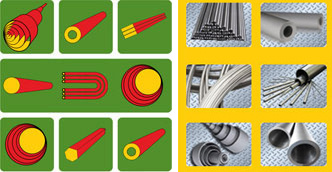
 Process VisualizationThe company's products are primarily used in industrial equipment sectors such as nuclear power, petroleum, petrochemicals, chemical engineering, power generation, automotive, shipbuilding, fertilizer production, pharmaceuticals, papermaking, sugar refining, and machinery manufacturing.
 -
 About UsTsisco Industrial Ltd. was established in 2010. Originating from the Tsingshan ecosystem’s Shanghai platform, the company now operates independently and focuses on global supply-chain integration, distribution, and import/export of steel and alloy materials. We achieved ISO 9001 certification from TÜV Rheinland in 2012, and ISO 9001, ISO 14001 and ISO 45001 certifications from LRQA in 2022. These accreditations underpin continuous improvement and stable performance in quality, environment, and occupational health & safety.
-
Products & Solutions
Ultra-Pure Ferritic Stainless Steel Pipe/Tubes
Ultra-Pure Ferritic Stainless Steel Pipe/Tubes

Ultra-Pure Ferritic Stainless Steel Pipe/Tubes|Global Sourcing for Engineering & Procurement
1. Product Positioning and Applications
“Super-pure ferritic” stainless steel tubing/piping features ultra-low C+N, high Cr (~22–30%) with Mo/Nb/Ti stabilization. It targets chloride-bearing water, seawater and brine, condensers and heat exchangers, municipal/industrial water, and selected FGD duties. Key benefits include excellent resistance to chloride stress corrosion cracking, higher thermal conductivity, lower thermal expansion, and cost advantage over Ni-based and superaustenitic grades. Typical uses:
• Seawater and brine heat transfer: power plant condensers, MSF/MED desalination, seawater coolers.
• Municipal/industrial water: high-residual-chlorine distribution, sodium hypochlorite contact sections, reclaimed water with high Cl⁻.
• Process cooling and district energy: closed/open cooling loops, district cooling condensers.
• Chemical and FGD: neutral to mildly oxidizing aqueous media, scrubber liquor heat exchangers.
Not recommended without case-by-case qualification: strong reducing acids, deep-cryogenic toughness-critical parts, or continuous service above grade limits.
2. Standards Matrix (Global Mainstream)
• USA: ASTM A268 (ferritic & martensitic SS seamless/welded tubing, general service); ASTM A213 (seamless ferritic & austenitic alloy-steel boiler, superheater, and heat-exchanger tubes); ASTM A1016 (general requirements for ferritic/austenitic steel tubes, to be applied with A213/A268).
• Europe: EN 10216-5 (seamless stainless steel tubes for pressure purposes, TDC); EN 10217-7 (welded stainless steel tubes for pressure purposes, TDC).
• Japan & international sizes: JIS G3463 (stainless steel boiler and heat-exchanger tubes), JIS G3459 (stainless steel pipes for piping); dimensional tolerances can be selected per ISO 1127; pipe series per ASME B36.19M.
• Hygiene/Compliance (project-specific): NSF/ANSI 61 for potable water; PED for EU pressure equipment.
Notes: cite final edition/year in contracts. Public standard titles/scopes are available via official catalogs; see references at the end.
3. Scenario–Material–Standard–Size Mapping
• Seawater condensers & desalination (MSF/MED):
Materials: UNS S44660 (super-ferritic ~29Cr class), UNS S44735 (29Cr-Mo strengthened); cost-driven options include Type 444 (UNS S44400).
Standards: ASTM A213 for heat-exchanger tubing; ASTM A268 or EN 10216-5/EN 10217-7 for system piping.
Sizes: OD 12.7–38.1 mm, WT 0.7–2.0 mm, 6–18 m; large-bore piping NPS 1–24 per ASME B36.19M.
• Industrial cooling water & coastal high-chlorination networks:
Materials: UNS S44400, UNS S44627 (26Cr-1Mo), upgrade to S44660 for higher chlorine or temperature.
Standards: ASTM A268 (general service), EN 10217-7 (welded pressure tubes); apply ASTM A1016 general requirements.
Sizes: DN 25–600; WT by design.
• FGD—scrubber liquor heat exchange:
Materials: UNS S44660/ S44735; benchmark against superaustenitic/duplex if chloride and temperature are severe.
Standards: ASTM A213 (HEX tubes), ASTM A268 or EN 10216-5 (piping).
Sizes: OD 19–50 mm, WT 1.0–3.0 mm.
• Sodium hypochlorite and high free-chlorine sections:
Materials: UNS S44400, UNS S44627; upgrade to S44660 for stronger oxidation or higher temperature.
Standards: ASTM A268 / EN 10217-7.
Sizes: DN 15–150; specify PTFE gaskets and crevice-averse design.
4. Size Range & Tolerances
• OD: 6–610 mm (HEX typically 12.7–38.1 mm; piping per B36.19M).
• WT: 0.7–25 mm (HEX 0.7–2.11 mm typical; piping by calculation).
• Length: 6–18 m (longer or U-bend on request).
• Tolerances: select per ISO 1127 (D2/D3 for OD, T3/T4 for WT) or per ASTM A213/A268 clauses; welded pressure tubes per EN 10217-7. Specify straightness, ovality, end squareness in the PO.
• Surface/cleanliness: BA or EP as required; state target Ra for HEX and high-purity water service.
5. Manufacturing & Critical Controls
• Metallurgy: EAF/BOF + AOD/VOD for ultra-low C+N; ESR if required; precise control of Mo/Ti/Nb and nonmetallic inclusions.
• Forming: hot extrusion/rolling and piercing (seamless) or strip forming + autogenous welding (welded); control U-bend thinning and re-anneal for HEX.
• Heat treatment: solution anneal + rapid quench to avoid σ/χ phases; ensure weld/HAZ microstructural parity.
• Surface & cleaning: pickling–passivation; EP if needed; strictly control iron contamination and residual chlorides; declare cleaning compliance for potable water.
6. Quality & Documentation
• Apply ASTM A1016 (or EN 10216-5/EN 10217-7 equivalents) for chemistry, mechanicals, dimensions, and visual checks.
• NDE: UT/ET/RT/PMI per standard + project; HEX tubing often 100% ET/UT.
• Corrosion verification: ASTM G48 (pitting/crevice), ASTM A763 (IGA for ferritic SS) as needed, plus service-specific simulation.
• Hydro/air tightness: piecewise or 100% as specified; HEX tubes typically hydrostatically tested.
• Docs: EN 10204 3.1/3.2 MTCs, heat-treat curves, NDE reports, cleaning and hygiene compliance (e.g., NSF/ANSI 61) where applicable.
7. Supply Forms & Packaging
Straight, U-bend, or coiled small-diameter; plastic end caps; dry, oil-free interior; dual-bag clean packaging for hygiene service; markings include heat, grade, size/tolerances, and standard edition.
8. Ordering Checklist
Standard & edition (e.g., “ASTM A213-2024”, plus “ASTM A1016”); Grade & condition (“UNS S44660, solution annealed”); Size & tolerances (OD×WT×L; ISO 1127 classes or ASTM clauses; straightness/ovality); Surface/cleanliness (BA/EP and target Ra); Tests (ET/UT coverage, hydro, A763/G48, PMI); Docs/TPIs (EN 10204 3.1/3.2).
9. Material Selection Guide (Quick)
Seawater/high-chloride HEX → UNS S44660 / S44735; cost-sensitive cooling water → UNS S44400; municipal/reuse water → UNS S44400, upgrade to S44660 for higher Cl⁻/T; neutral–mildly oxidizing chemical water → UNS S44627/S44660; verify boundaries for deep-cryogenic, strong reducing acids, or continuous high-T.
10. Procurement, Installation & O&M Risk Notes
Control welding heat input and post-weld cleaning for ferritics; prevent carbon-steel contamination; avoid crevices/stagnation in chloride service; specify thinning limits and residual stress control for U-bends and expansion.
11. Representative PO Lines (ready-to-use)
• “Tubes, ASTM A213, UNS S44660, OD 25.4 mm × WT 1.24 mm × L 12 m, solution annealed, BA ID/OD; 100% ET + hydro; G48A at 25 °C sampling; EN 10204 3.1.”
• “Pipe, EN 10217-7, UNS S44400, DN 300 × 12 m, bevel per ASME B16.25, pickled & passivated; UT sampling; EN 10204 3.1.”
12. Representative Global Producers (A–Z, examples)
Alleima (ex-Sandvik Materials Technology), JFE Steel, Kobe Steel, NEOTISS, Nippon Steel Stainless Steel, Plymouth Tube, Tubacex, etc. Capabilities and QA windows vary; confirm against mill datasheets and contract.
Ultra-Pure Ferritic Stainless Steel Pipe/Tubes|Technical Specifications
1) Definition & use
High-purity/super-ferritic stainless tubes/pipes for condensers/feed-water heaters, seawater or reclaimed high-chloride cooling, desalination (evaporator/condenser/tubesheet-to-tube sections), domestic hot-water/solar systems, and chlorinated process streams/HEX components where 304/316L underperform and duplex/super-austenitic may be over-spec or costly.
2) Standards matrix
• ASTM/ASME: ASTM A268/SA268 (ferritic/martensitic stainless tubes, seamless & welded); ASTM A1016/A999 (general requirements). TEMA RCB-2.31 for U-bend geometry; if ASTM A556 geometry clauses are referenced, state “geometry reference only”.
• EN/ISO: EN 10216-5 (seamless), EN 10217-7 (welded), ISO 1127 (D/T tolerances).
• JIS: JIS G3459 (stainless pipes), JIS G3463 (boiler/HEX tubes).
• GB (China): GB/T 14976, GB/T 13296.
• Corrosion tests: ASTM A763 (ferritic IGC W/X/Y), ASTM G48 (pitting/crevice; CPT/CCT).
3) Grades (engineering groupings)
• High-purity ferritic: UNS S44400 (444, EN 1.4521) ~18Cr-2Mo, ultra-low C+N; hot-water/weak-Cl service, appliances, some auto hot-end; better pitting/crevice than 316L and more robust HAZ toughness.
• Super-ferritic (25–30Cr, 3–4Mo, small Ni; PREN ≥ 40):
• UNS S44660 (26-3-3 type) ~26Cr-3Mo-3Ni, Ti/Nb stabilized; seawater/high-Cl cooling, desalination evaporator/condenser, FWH.
• UNS S44700 / S44735 (29-4/AL29-4C® type) ~29Cr-4Mo; top-end pitting/crevice resistance vs 316L/444 for the harshest seawater sections.
• UNS S44635 (25-4-4 type) ~25Cr-4Mo-4Ni; high-chloride chemical duties.
Note: exact chemistry/tolerances vary by mill; set project PREN/CPT floors in the PO.
4) Sizes & tolerances (typical windows)
• HEX/Condenser straight tubes: OD 12.7–25.4 mm, WT 0.7–2.0 mm, L 6–25 m; U-bends typically R ≥ 1.5×OD.
• Industrial piping (A268): OD 6–203 mm, WT 0.5–25 mm; larger by weld-up/transition.
• Tolerances/geometry: per ASTM A1016/A999 or ISO 1127 (D/T); explicitly limit ovality, eccentricity, straightness, squareness; U-bend S_min/leg difference/out-of-plane per TEMA.
5) Manufacturing & welding control
AOD/VOD → hot extrusion or cold pilger/draw (or strip-formed + GTAW/laser/PAW) → solution anneal + rapid cool → pickling/BA/EP → straightening/sizing.
Welding: low heat input, controlled interpass (≈≤150–200 °C), matching fillers (e.g., ER444) or Ni-based transition (ER309L/ERNiCrMo-3) for dissimilar/high-constraint joints; post-weld pickling/passivation to remove heat tint. Avoid prolonged 400–550 °C exposure (475 °C embrittlement window).
6) Performance (qualitative, engineering-useful)
• Corrosion: higher Cr/Mo and ultra-low interstitials → strong pitting/crevice resistance vs 316L; super-ferritic grades (S44660/S44735) suit severe seawater/crevice risks.
• SCC: ferritics are inherently resistant to chloride-SCC vs austenitics.
• Weldability: low C/N + stabilization improve HAZ toughness & IGC resistance.
• Thermophysics: lower CTE and higher thermal conductivity than austenitics; magnetic (consider for sensitive applications).
• Temperature: manage 475 °C embrittlement risk; thick sections have lower impact toughness.
7) Quick selection (service → grade)
• Seawater/high-Cl cooling & desalination (turbulent/crevice-prone): S44660 / S44735 with ASTM G48 (Method A/E) CPT/CCT targets.
• Hot-water/weak-Cl appliances/heat-exchangers: S44400 (cost-effective, robust).
• Chloride chemical media (non-strongly reducing): S44400/S44660; escalate to S44735 if temperature/Cl⁻/crevice demand.
• Auto exhaust/high-temp oxidation: 409/439/444 mainstream; ultra/super-ferritic shine in HEX/condenser.
8) QA/QC & ITP essentials
Chemistry with ppm-level C,N; low inclusions/nitrides; tensile/hardness (impact if needed); ASTM A763 (W/X/Y) and ASTM G48 (Method A/B/E/F; CPT/CCT) as specified; ET 100% for thin walls; UT/RT for heavy/welded criticals; hydro/tightness per spec; geometry & surface per PO; docs: EN 10204 3.1/3.2, HT charts, NDE/hydro/corrosion/geometry, TPI if required.
9) Supply, packaging, docs
Forms: seamless/welded straight tubes, HEX tubes, U-bends; finishes: pickled/BA/(EP); clean services may require oil-free/low TOC/particulate records & double-bagging; caps + dry packing; chloride-free materials; full traceability and labeling.
10) RFQ/PO checklist (ready to paste)
1. Spec + UNS + form: e.g., ASTM A268 UNS S44400 (Seamless/Welded); ASTM A268 UNS S44660 (Tube); TEMA RCB-2.31 for U-bends.
2. Size & tolerances: OD × WT × L; A1016/A999 or ISO 1127; max ovality/eccentricity/straightness.
3. Route & HT: extrusion/cold pilger/drawn or welded (GTAW/laser); solution + rapid cool; BA/EP if needed.
4. Welding & assembly: process limits (heat input/interpass), fillers (matching or Ni-based), bevel (ASME B16.25).
5. Qualification: ET/UT/RT/DR, hydro; ASTM A763 & G48 (method/temperature/acceptance).
6. Docs/TPI: MTC 3.1/3.2; HT charts; NDE/hydro/corrosion/geometry; TPI plan.
7. Packing/cleanliness: caps/VCI/dry; cleanliness/TOC targets; traceability.
11) Construction risk controls
Control weld heat input/interpass; no PWHT for thin walls; assess stress-relief for heavy/constraint joints; thorough pickling/passivation & heat-tint removal; avoid prolonged 400–550 °C exposure; galvanic isolation vs CS/Cu/Ti with CP strategy; manage stagnation/deposits and residual chlorine; flush/dry before service.
12) Global ecosystem & representative companies (illustrative, verify UNS/coverage)
• Melt/flat & long (high-alloy stainless): Aperam, Nippon Steel Stainless (NSSC), Outokumpu, POSCO, TISCO / BAOSTEEL (China), Acerinox.
• Tube producers (seamless/welded/HEX): Alleima (ex-Sandvik MT), NEOTISS, Salzgitter Mannesmann Stainless Tubes (SMST), Tubacex Group, Nippon Steel Stainless Pipe & Tube / Kobe Stainless Tube (Japan), BUTTING, Jiuli Hi-Tech (China).
Note: Coverage of UNS S44400/S44660/S44700/S44735/S44635, forms (seamless/welded/HEX/U-bend) and MOQ/limits vary; validate via RFQ and recent references.
13) Example spec lines
• A) Seawater condenser (high turbulence)
Spec/grade: ASTM A268 UNS S44735 (AL29-4C type), Tube
Size: OD 25.4 mm × WT 1.65 mm × L 12 m; plain ends
Route: welded (GTAW, full inert purge) → solution + pickled/BA
Tests: Weld 100% ET + full-length ET + hydro each; ASTM G48 Method E with CPT ≥ XX °C
Docs: MTC 3.1 + NDE/hydro/corrosion
• B) FWH U-tubes (reclaimed high-Cl water)
Spec/grade: ASTM A268 UNS S44660, U-Tube per TEMA RCB-2.31
Size: OD 19.05 mm × WT 1.24 mm, leg 8 m; R/leg-diff/S_min per drawing
Route: seamless (extruded mother + cold pilger) → solution + pickled
Tests: ET 100% + hydro; ASTM A763 (W method) pass; TEMA geometry report
• C) Domestic hot-water plate-HEX tubes (cost-effective)
Spec/grade: ASTM A268 TP444 (UNS S44400)
Size: OD 15.88 mm × WT 0.8 mm × L 6 m
Requirements: oil-free interior; weld heat input cap; pickled + passivated
Tests: ET 100% (hydro on sampling); G48 Method A (temperature/weight-loss limit)
Tags: