-
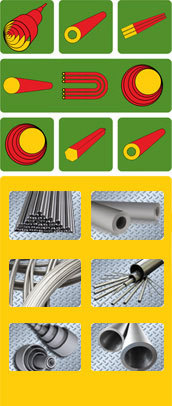
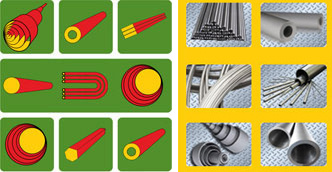
 Industries OverviewThe company's products are primarily used in industrial equipment sectors such as nuclear power, petroleum, petrochemicals, chemical engineering, power generation, automotive manufacturing, shipbuilding, fertilizer production, pharmaceuticals, papermaking, sugar refining, and machinery manufacturing.
 -
 Products & SolutionsOur Products: Ferrous metal ore raw materials (nickel ore, ferronickel, ferrochrome, ferromanganese, ferrosilicon, etc.), seamless pipes, welded pipes, medium-thick plates, plate coils, bars, wire rods, wire coils, pipe fittings, flanges, castings, etc.
 -
 CommunityThe company has established an excellent reputation within the industry through its strong credibility, comprehensive services, and ample resources.
 -
 Process VisualizationThe company's products are primarily used in industrial equipment sectors such as nuclear power, petroleum, petrochemicals, chemical engineering, power generation, automotive, shipbuilding, fertilizer production, pharmaceuticals, papermaking, sugar refining, and machinery manufacturing.
 -
 About UsTsisco Industrial Ltd. was established in 2010. Originating from the Tsingshan ecosystem’s Shanghai platform, the company now operates independently and focuses on global supply-chain integration, distribution, and import/export of steel and alloy materials. We achieved ISO 9001 certification from TÜV Rheinland in 2012, and ISO 9001, ISO 14001 and ISO 45001 certifications from LRQA in 2022. These accreditations underpin continuous improvement and stable performance in quality, environment, and occupational health & safety.
-
Products & Solutions
Offshore Structural Steel for Oil & Gas
Offshore Structural Steel for Oil & Gas

Offshore Structural Steel for Oil & Gas |Global Sourcing for Engineering & Procurement
1. Product Positioning and Application Scope
Offshore structural steels are used in fixed and floating offshore platforms, jackets, topsides modules, legs and nodes, offshore wind foundations, pipe racks and lifting structures. Service conditions include low temperature, splash-zone corrosion, seawater chlorides, wave-induced fatigue, welding residual stresses and sustained loads. Core properties are yield strength, low-temperature toughness, fatigue and fracture toughness, weldability and through-thickness performance. Selection follows international codes combined with project-specific specifications. See ISO 19902 for requirements on fixed steel offshore structures; EN 10225-1/-2/-3 for general, plate and sections/bars delivery conditions; and DNV rules and recommended practices for materials and fatigue. Sources referenced at the end.
2. Standards Matrix (organized by region and use)
1. International & Design
ISO 19902 (fixed steel offshore structures); DNV material rules and fatigue recommendations; NORSOK M-101 (fabrication) and M-120 (material data sheets).
2. Europe – Material Standards
EN 10225-1 (general requirements), EN 10225-2 (plates), EN 10225-3 (hot-rolled sections and bars). Typical grades include S355G, S420G and S460G families with delivery conditions “+M” (TMCP), “+N” (normalized) or “+Q/+QT” (quenched/tempered).
3. Americas – Material Standards
API 2H (C-Mn steel plate, e.g., Gr 42/50), API 2W (TMCP plates, e.g., Gr 50/60), API 2Y (Q&T plates, e.g., Gr 60/65).
4. Complementary Practices
Welding procedure and personnel per ISO 15614-1/ISO 9606-1 or AWS D1.1; CTOD and through-thickness (Z-direction) properties as required; protective coatings per NORSOK M-501 where applicable.
3. Scenario—Material—Standard—Size Mapping (buyer-oriented quick guide)
1. Fixed jackets & piles (mid-to-high strength with low-temperature toughness)
Materials/standards: EN 10225 S355G10+M/+NL, S420G2+M, or API 2H Gr 50 and API 2W Gr 50/60 as appropriate.
Size window: plates ~10–120 mm; critical nodes up to ~150 mm; sections and bars per EN 10225-3.
2. Topsides & deck beams (moderate strength, good weldability)
Materials/standards: EN 10225 S355G8/G10 (+N/+M); API 2H Gr 42/50.
Size window: plates 8–80 mm; hot-rolled H-sections and bars per EN 10225-3.
3. Offshore wind foundations (monopiles, jackets, transition pieces)
Materials/standards: EN 10225 S355G10+M/+NL, S420G2+M; API 2W Gr 50/60 (TMCP) where thick-plate toughness and weldability are critical.
Size window: plates 20–120 mm; rings and nodes per design.
4. Cold and arctic service (impact at −40 °C or below)
Materials/standards: EN 10225 with “+NL” low-temperature classes, or higher-grade API 2W/2Y; CTOD as specified.
Size window: plates 20–150 mm.
5. Highly stressed nodes & fatigue-sensitive details (CTOD/Z-direction)
Materials/standards: EN 10225 S420/S460G or API 2Y (Q&T); require Z-direction properties and CTOD; verify HAZ toughness in WPS/PQR.
6. Modular topsides & secondary structures (cost first)
Materials/standards: EN 10225 S355G family or API 2H Gr 42, subject to toughness/weldability.
4. Size Range and Tolerances (typical engineering window)
Plates: thickness ~6–150 mm (thicker on request), width ~2000–4200 mm, length 6–24 m; delivery +N/+M/+Q/+QT.
Sections & bars: per EN 10225-3 dimensional series and tolerances.
Tolerances: shape/size per EN 10225 or the agreed API/EN/DNV clauses; specify flatness, waviness and Z-direction requirements in the contract.
5. Manufacturing Flow and Critical Controls
Steelmaking & cleanliness: primary steelmaking with secondary refining; control P, S, H, O, N to reduce inclusions and SSC risks.
TMCP rolling (+M/API 2W): achieve fine grain and superior low-temperature toughness via controlled rolling and cooling.
Q&T (+Q/+QT/API 2Y): for high-strength thick plates and demanding Z-properties.
Weldability & CEV: manage heat input, preheat/interpass per calculated CEV/Pcm; require CTOD and Z-properties at splash-zone and full-penetration butt joints.
Surface & protection: blasting and coating per project; NORSOK M-501 is commonly referenced.
6. Inspection & Documentation
Chemistry & mechanics: YS/UTS/El, hardness, impact at −20/−40 °C (or project value).
Fracture & Z-properties: CTOD and Z-direction as required by node stress state.
NDE: UT/MT/PT per EN/API/DNV; heavy plates and butt joints prioritized.
Dimensions & appearance: thickness/flatness/edge defects; cutting and bevels per welding code.
Documents & traceability: EN 10204 3.1/3.2, heat-treatment charts, NDE reports, third-party witnessing (DNV, TÜV, ABS, etc.).
7. Supply Forms & Packing
Forms: plates, hot-rolled sections, bars; profiling, bevelling and marking available.
Packing: edge protection, rust prevention and moisture control; clear tagging and traceable packing lists.
8. Ordering Checklist (copy-ready for RFQ/PO)
Standard & grade: specify ISO/EN/API system, edition and grade (e.g., “EN 10225-2 S355G10+M/+NL” or "API 2W Gr 50”).
Size & condition: thickness ×width × length; delivery (+N/+M/+QT); flatness class.
Toughness & fracture: impact tem perature/energy, CTOD if required; Z-direction for nodes.
Weldability & NDE: CEV/Pcm targets, WPS/PQR, UT class and coverage.
Docs & witnessing: EN 10204 3.1/3.2, third-party list and witness points.
Protection & coating: blast grade, coating system (e.g., NORSOK M-501), transport protection.
9. Selection Guide (narrative)
Strength first: jackets/piles prefer S355G10+M/S420G2+M or API 2W/2Y; add CTOD and Z-properties for arctic or very thick nodes.
Weldability & toughness: at equal strength, choose TMCP (+M/API 2W) to widen welding window and reduce preheat.
Cost & availability: modules and secondary details may use S355G or API 2H; highly loaded nodes use S420/S460 or API 2Y.
10. Risks & Pitfalls (procurement, fabrication, O&M)
Do not substitute water-service or generic structural steels for offshore grades; verify low-temperature and fatigue to ISO/EN/API.
Do not substitute ordinary ship plates for offshore thick plates without checking impact and CTOD.
Cross-system interfaces (ASME Class, EN PN, NORSOK) require conversion and strength checks.
Control welding heat input/preheat to avoid HAZ embrittlement; follow WPS/PQR strictly.
Provide robust coating/CP schemes for splash/tidal zones per required service life.
11. Representative Specification Lines (copy-ready)
Example 1 – Jacket plate
“Plate, EN 10225-2, S355G10+M, 60 mm × 2500 mm × 12000 mm; impact −40 °C all three directions; UT project class E, 100%; EN 10204 3.2.”
Example 2 – Arctic node thick plate
“Plate, API 2W Gr 60, 90 mm × 3000 mm × 12000 mm; CTOD per project temperature and δ criteria; Z-direction Z35; UT 100%; 3.2 witnessing.”
Example 3 – Topsides sections
“Section, EN 10225-3, S355G8+N, H-section per drawing; impact −20 °C; CMTR 3.1.”
12. Global Representative Producers (alphabetical, examples)
ArcelorMittal Industeel (FR/BE, offshore/TMCP plates), SSAB (Nordics, offshore & marine), Dillinger (DE, heavy plates), JFE Steel (JP), Nippon Steel (JP), POSCO (KR), voestalpine Grobblech (AT). Public brochures and datasheets indicate long-term supply to EN 10225 and API 2W/2H families.
Offshore Structural Steel for Oil & Gas |Technical Specification
1. Scope and application
• Structural steels for jackets, piles, topsides modules and deck girders, semi-sub/TLP/FPSO topsides, bridges, subsea frames/guards and other primary load-bearing components.
• Key requirements: strength (yield 355–460 MPa typical, higher as project-qualified), low-temperature toughness (−20/−40/−60 °C), weldability (CEV/PCM limits), thick-plate through-thickness properties, Z-direction (lamellar-tearing) resistance, fatigue/fracture (CTOD), and durability under marine corrosion with coating/CP compatibility.
• Design life typically 20–25 years (project-specific).
2. Codes and standards matrix
• Global design: ISO 19900 (general), ISO 19902 (fixed steel offshore structures), ISO 19904-1 (floating), NORSOK N-004 (design of steel structures).
• Materials/products: EN 10225-1/-2/-3 (offshore weldable steels; M=TMCP; Q/QL/QL1=Q&T subgrades), API 2W/2H/2Y, legacy BS 7191; GB/T 712 (China) with EN 10225-equivalent add-ons.
• Fabrication/welding/inspection: DNVGL-OS-C401 / DNV-OS-C401, ISO 15614-1 (WPS/PQR), ISO 9606-1 (welder qual.), DNV-RP-C203 (fatigue).
• NDE and supplementary properties: EN 10160 (plate UT), ASTM A578 (UT alt.), EN 10164 (Z15/Z25/Z35), API RP 2Z (CTOD/HAZ and pre-production tests).
• Corrosion protection/CP: NORSOK M-501, ISO 12944-9 (CX/Im4), ISO 2063-1/-2 (TSA), DNV-RP-B401 (cathodic protection).
• Hollow sections: EN 10210/EN 10219; tolerances: EN 10029 (plates), EN 10034 (I/H sections) or ASTM A6.
3. Materials and grades (by delivery condition)
• TMCP: EN 10225-2 S355G10+M, S420G2+M; API 2W Gr.50/60. Benefits: low CEV, good HAZ toughness window, robust thick-plate properties.
• Q&T: EN 10225-3 S420Q/QL/QL1, S460Q/QL/QL1 (higher grades by project qual.); API 2Y. For higher strength/thickness/fatigue-critical details; tighter control of heat input and tempering.
• Sections/hollow: prefer EN 10225-compliant; if EN 10025-4 (S355ML/S460ML) is used, append clauses to match CVN at service temperature, UT, Z-direction and CTOD.
• Typical property windows: yield 355–460 MPa; CVN at target temperature (e.g., −40 °C) per project; CTOD for weld/HAZ at specified temperature where required.
4. Sizes and tolerances (typical capability)
• Plates: 8–120(150) mm thick, width ≤ 4200 mm, length ≤ 18 m; tolerances per EN 10029; edges can be prepared for beveling.
• Piles/cans (LSAW/rolled): OD ~1000–3000 mm, WT 25–100 mm; roundness/straightness/end squareness per drawings; girth/long seams inspected per DNV-OS-C401/project.
• Sections/hollow: tolerances per EN 10034/EN 10210/EN 10219; rolled cans based on EN 10225 plate with added forming/welding tolerances and NDE.
5. Steelmaking and manufacture
• BOF/EAF → LF/VD/VOD; control C/S/P/N and inclusion morphology (Ca treatment where applicable).
• Continuous casting and homogenization; center segregation/porosity assessed for heavy plates (project clause).
• TMCP for fine grain and low CEV; Q&T for higher strength/toughness—verify hardness/impact and, where specified, metallography on heavy plates.
• Heat straightening and UT per EN 10160 or ASTM A578; Z-direction properties via EN 10164.
• Pre-coating prep: Sa2.5 blast, 50–85 μm profile; coating per NORSOK M-501.
6. Service–material–standard quick mapping (engineering guide)
• Atmospheric (offshore topsides): EN 10225-2 S355G10+M or S420G2+M; alt. API 2W-50/60; CVN at design Tmin (e.g., −40 °C); plate UT ≥ EN 10160 S2/E2; coating NORSOK M-501 System 1.
• Splash/tidal zone: same steel or upgrade to Q/QL; for thick/high-triaxiality joints specify EN 10164 Z25/Z35; CTOD (weld+HAZ) per API RP 2Z; coating with TSA-based NORSOK System 7/7A/7B; submerged parts with CP per DNV-RP-B401.
• Fully submerged: same steel family; tighter weld quality/inspection (TOFD/UT); coating System 7B/7C; CP design per DNV-RP-B401.
• Cold regions (−40 to −60 °C): EN 10225 QL/QL1 or M low-temperature subgrades; CVN at target temperature; welding heat-input/interpass limits per steelmaker guidance and project PQR; CTOD as required.
• High-fatigue details (K/T/Y nodes, box transitions): prefer S420G2+M or QL/QL1; elevated UT class (e.g., Level C or EN 10160 S2/E3); mandatory CTOD/HAZ; design to DNV-RP-C203.
• Thick plates & triaxial nodes: enforce Z25/Z35; low-hydrogen consumables and strict baking/storage; define max heat input and interpass; backing/run-in/out beads as needed to mitigate lamellar tearing.
• Legacy/alternatives: when BS 7191 or EN 10025-4 are specified, add clauses for CVN at Tmin, CTOD (weld/HAZ), EN 10160 UT, EN 10164 Z-direction and DNV-OS-C401.
7. Welding and fabrication controls
• WPS/PQR to ISO 15614-1; for high-heat-input and thick joints, pre-production qualification with HAZ-oriented CVN/CTOD; sampling and ranges per DNV-OS-C401.
• Low-hydrogen regime: baked consumables, preheat/interpass from CEV/PCM, thickness and restraint; controlled cooling/hydrogen bake-out if needed.
• NDE: plate UT (EN 10160 S2/E2, edge/splice enhanced); weld RT/UT/TOFD per joint class; PT/MT for surface.
• Dimensional control: roundness/straightness/end alignment for cans/piles; shrinkage allowances and fit-up for modules; recorded geometric QA.
• Traceability: heat/plate/rolling IDs; orientation and assembly marks.
8. QA/QC and acceptance
• Chemistry/mechanics: elements within standard and mill data; CVN at project Tmin (e.g., −40 °C 27–50 J per spec.); CTOD (base/weld/HAZ) per API RP 2Z or ISO 15653 as required.
• NDE: plate UT (EN 10160 or ASTM A578); weld RT/UT/TOFD per DNV-OS-C401 and project classes.
• Z-direction: EN 10164 Z15/Z25/Z35 defined in PO and drawings; Z25/Z35 for triaxial joints.
• Documentation: EN 10204 3.2 (3rd-party/class witness), including chemistry, tensile, CVN/CTOD, UT/TOFD/RT, dimensional/visual, heat-treatment charts, fabrication/welding records, release notes.
• Coating/CP: NORSOK M-501 pre-qualification evidence; application QC (environment, salt, cleanliness, DFT, adhesion, holiday); CP calculation and anode list.
9. Delivery and packing
• Supply forms: plates, sections, rolled cans and LSAW piles.
• Surface: Sa2.5 + shop primer (compatible) or bare with temporary protection; edge guards.
• ID: grade/standard/condition (M/Q/QL/QL1), size, heat/plate ID, Z-class, UT class, acceptance stamp; orientation marks for splices.
• Logistics: cribbing, edge protection, lashing; seaworthy preservation; packing list with item-ID mapping.
10. RFQ/PO checklist
11. Standard/grade: e.g., “EN 10225-2 S355G10+M” or “EN 10225-3 S460QL1” or “API 2W Gr.60”.
12. Size/condition: thickness × width × length; M or Q/QL/QL1; tolerances (EN 10029).
13. Toughness: CVN at specified Tmin (e.g., −40 °C with avg/min values).
14. CTOD/HAZ: required/not, temperature, orientation and acceptance (API RP 2Z / ISO 15653).
15. UT class: EN 10160 S2/E2 (edge/splice enhanced) or ASTM A578 Level C; weld RT/UT/TOFD coverage/levels for cans/piles.
16. Z-direction: EN 10164 Z25 / Z35 and drawing locations.
17. Welding envelope: max heat input, interpass, preheat; PPQT with HAZ toughness where applicable.
18. Coating: NORSOK M-501 system ID (e.g., System 7A/7B, TSA thickness), surface prep grade/profile; CP per DNV-RP-B401.
19. Witnessing: EN 10204 3.2; DNV/ABS/LR/BV/CCS witnessing and spot checks.
20. Documentation: MTC, chemistry/mechanics/CVN/CTOD, UT/TOFD/RT, dimensional/visual, HT charts, coating QC, CP calcs and anode schedule.
21. Construction and site QA
• Low-hydrogen welding: consumable baking/storage, preheat/interpass, controlled cooling; avoid moisture/salt contamination.
• Lamellar-tearing mitigation: Z25/Z35 plates for triaxial joints; joint design/backing to reduce through-thickness strain.
• Heat-input: avoid excessive heat cycles on TMCP; control temper embrittlement risks for thick Q&T.
• Geometry/stress: shrinkage allowance, misalignment limits; grind transitions on fatigue-sensitive details.
• Coating/CP: cleanliness, climate control, TSA protection; anode layout and electrical isolation verified.
• Records: weld maps/NDE, dimensional re-check, coating QC, CP commissioning; as-built dossier.
12. Pitfalls and risk controls
• Substituting API 5L or general structural steels for EN 10225/API 2W/2H/2Y (reject).
• Using weathering steels in splash/submerged zones (reject).
• Toughness not verified at service Tmin or missing CTOD; lacking Z25/Z35 on triaxial joints (reject).
• Inadequate UT edge/splice coverage; missing TOFD/RT combinations (reject).
• Excessive re-weld/high heat input on TMCP without re-qualification (alert).
• Coating not to NORSOK M-501 or CP not to DNV-RP-B401 (alert).
13. Global industry clusters and representative producers (alphabetical, indicative)
• Offshore plates: ArcelorMittal (incl. Industeel), Dillinger, Salzgitter, thyssenkrupp, voestalpine Grobblech, SSAB, JFE Steel, Nippon Steel, POSCO, Hyundai Steel, Baowu (Baosteel), Ansteel, Wuyang Steel, Shougang.
• Piles/cans and heavy LSAW: EEW Group, EUROPIPE, Jindal SAW, Welspun, Vallourec (structural cans), Tenaris (project supply).
• Classification: DNV, ABS, LR, BV, CCS.
14. Example spec lines
• Plate (atmospheric/topsides):
“EN 10225-2 S355G10+M, 50 mm × 3000 mm × 12000 mm; CVN ≥ 50 J @ −40 °C; EN 10160 S2/E2; EN 10164 Z25; EN 10204 3.2 (DNV witnessed).”
• Plate (splash/fatigue-critical):
“EN 10225-3 S420QL1, 70 mm × 3200 mm × 12000 mm; CVN ≥ 50 J @ −40 °C; CTOD (WM+HAZ) qualified at project temperature; EN 10160 S2/E3; EN 10164 Z35; 3.2 certificate.”
• Cans/piles:
“Base plate EN 10225-2 S420G2+M; LSAW Ø 2000 mm × t 60 mm × L 24 m; roundness ≤ 0.5%; long/girth weld RT/UT/TOFD 100%; end-match misalignment ≤ 1.5 mm; MTC 3.2.”
• Coating/CP:
“NORSOK M-501 System 7A (TSA 300 μm + topcoat); Sa2.5, profile 60–80 μm; DFT/holiday/adhesion passed; CP per DNV-RP-B401 with anode list attached.”
Tags: